Chinese Herbal Medicine and Modern Supplements: Understanding the Difference






A lot of people look this up after buying something labeled Chinese herbal and still not knowing whether they bought a medicine, a supplement, or a drink. That confusion is fair, because the same plant can show up in a clinic formula, a capsule, and a tea bag, and the box often sounds medical even when the product is sitting next to groceries.
Traditional Chinese medicine treats herbs as part of a diagnosis. A licensed practitioner looks at how the body is doing right now, writes a mix for that person, and changes it when the body changes. A modern dietary supplement is built for everyone on the shelf. In the United States it is sold under food law, not drug law, so it cannot claim to treat or cure a disease. Ordinary herbal tea is quieter than both: it is a drink at kitchen strength, not a prescription.
Trouble starts when those jobs get swapped. A capsule will not do what a clinic formula does, and a strong herbal soup is a poor stand-in for a daily vitamin.
Table of Contents
1. What Is the Difference Between Chinese Herbal Medicine and Modern Supplements? →
2. What Traditional Chinese Medicine Actually Is →
3. What a Modern Dietary Supplement Actually Is →
4. The Same Herb Can Be Food, a Supplement, or a Medicine →
5. Why a Formula Is Not a Single Extract →
What Is the Difference Between Chinese Herbal Medicine and Modern Supplements?
Chinese herbal medicine is care written for one person inside traditional Chinese medicine (TCM). A trained practitioner looks at the whole picture, builds a mix of herbs, and changes that mix as the body changes. A modern dietary supplement is a product made for a general shopper, sold as food rather than as a drug, and not allowed to claim that it treats, cures, or prevents disease.
Ginger shows why the English name is a weak guide. It can season dinner, sit in a capsule, or enter a clinic formula as a warming herb. Those three uses do not share a dose, a legal identity, or a promise.
| Clinic herbal medicine | Modern supplement | Daily herbal tea | |
|---|---|---|---|
| Who it is for | One person, after a visit | Anyone who buys it | Anyone drinking it as a beverage |
| How it is chosen | By how the body looks and feels that day | By the label and a set serving size | By taste, season, or habit |
| How you take it | A strong simmered soup, granules, or a formula that can be changed | Capsule, powder, gummy, or a tea sold as a supplement | Ordinary steeped tea |
| What it may claim | Clinical care belongs with a licensed practitioner | Cannot claim to treat disease | Cannot claim to treat disease |
| Who watches the dose | The practitioner | The company and the label | Kitchen-level steeping |
A lot of Chinese herbs never leave the kitchen. They are eaten or drunk in food amounts, with no clinic visit and no concentrated extract on the label. Treating that kitchen tea like a clinic soup, or a clinic soup like a capsule, is how the promise on the box gets ahead of the product.
What Traditional Chinese Medicine Actually Is
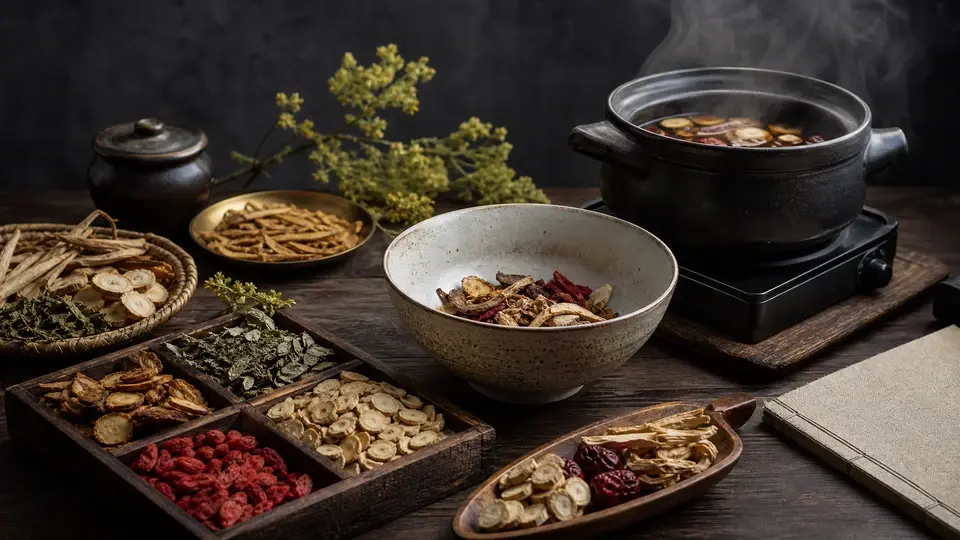
Traditional Chinese medicine is a full medical system, not a style of packaging. Johns Hopkins Medicine describes it as care chosen for the individual, using acupuncture, herbal formulas, and related methods. Victoria’s Better Health Channel makes the same point: herbs are prescribed for a diagnosed imbalance, not for a shopping-list symptom.
A clinic visit does not start with which herb is good for a named complaint. It starts with the person in the room. Two people with the same Western symptom can leave with different formulas because their bodies are not in the same state that day. Classic formulas are built so some herbs carry the main work, others guide or assist, and others keep the mix from being too harsh. That is why Chinese herbal medicine rarely uses a single plant the way a ginseng capsule does.
How the herbs are prepared is part of the care. Clinic herbs are often simmered for a long time into a strong soup. That is a different object from a supermarket tea bag left in a mug for three minutes. Better Health Channel is blunt about intensity: herbs can act on the body as powerfully as pharmaceutical drugs and deserve the same caution.
The National Center for Complementary and Integrative Health reports mixed results for Chinese herbal products, and it documents a real quality problem: some products have been contaminated with metals, pesticides, hidden drugs, or the wrong plant. Do not use TCM to replace or delay ordinary medical care for a serious condition, and tell every clinician what you are taking.
What a Modern Dietary Supplement Actually Is
In U.S. law, a dietary supplement is a product meant to add to the diet. It is taken by mouth and labeled as a supplement. It can contain vitamins, minerals, herbs, or extracts of those ingredients. The FDA’s consumer Q&A is stricter than most wellness copy.
If a supplement is sold as a treatment, prevention, or cure for a disease, the FDA treats it as a drug. Softer language such as “supports digestion” can appear, and when it does, the label must say the statement has not been evaluated by the FDA and the product is not intended to diagnose, treat, cure, or prevent any disease. That line is the legal border.
The FDA does not approve supplements for safety or effectiveness before they are sold. Companies are responsible for safety and honest labels. The agency can inspect and act after a problem. It does not pre-certify that a capsule works. The NIH Office of Dietary Supplements says this in plain language.
“Standardized” on a bottle usually means the factory aimed at a similar amount of one marker chemical from batch to batch. U.S. law does not require that process, and the marker may not be the part of the plant that does anything in the body. Consistency is not the same thing as a traditional formula, a clinic dose, or proof that the product works.
The Same Herb Can Be Food, a Supplement, or a Medicine
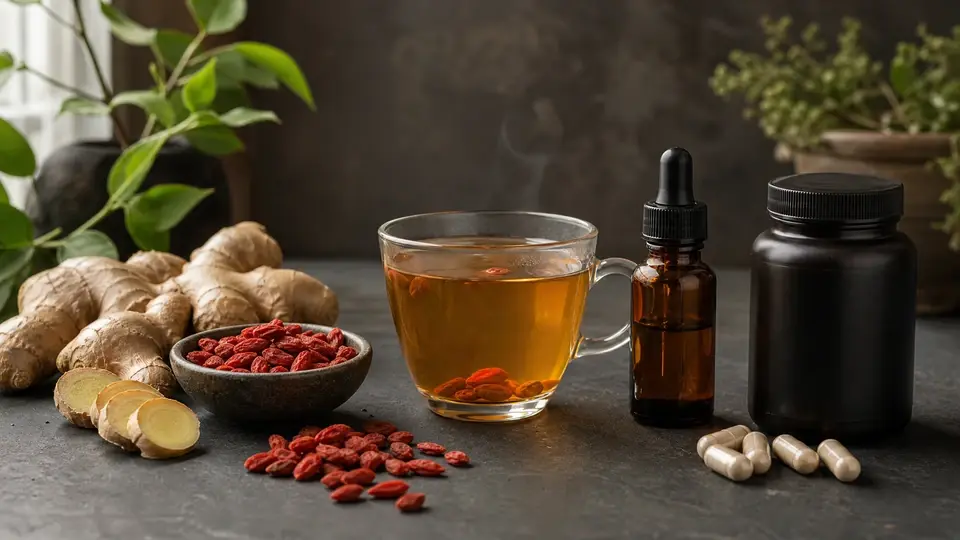
Ginger, goji berries, and licorice root can all do more than one job. They can go into food, they can be sold as supplements, and they can appear inside a prescribed formula. Those uses do not share a dose, a preparation, or a legal identity.
NIH’s herb background page is useful here. A tea, a long-simmered soup, a liquid extract, and a dry extract are not equal strengths. Peppermint tea is an ordinary drink for most people, while peppermint oil is concentrated enough to be mishandled. “Natural” does not settle the question. The plant, how it was prepared, how much you take, and how long you take it do.
Chinese cooking already treats some plants as both food and medicine, with the kitchen version milder and not aimed at a diagnosed pattern. That third identity is easy to miss in a store, because the English name does not change when the job does. If the label, the dose, and the story disagree, believe how the product is actually sold and prepared.
Why a Formula Is Not a Single Extract
Supplement marketing often starts with a paper about one plant, then sells that plant to everyone with a related complaint. Clinical Chinese herbal medicine starts with the person, then uses a combination that has been revised and constrained for a long time. Herbs used together can blunt a side effect or change how a compound from the plant moves through the body. Take the same herb out of its formula, raise the dose, and point it at a new commercial goal, and you are testing a new product that borrowed a name, not the tradition itself.
Ephedra made this visible in the United States. In traditional formulas it was used in a limited way, usually with other herbs, for short problems such as colds with coughing. Supplement marketing pulled the stimulating effect toward weight loss. After serious heart-related events, the FDA banned dietary supplements containing ephedra alkaloids in 2004. The bottle still used the same plant name, but the product was no longer the traditional one.
The other common mistake runs in reverse. Someone reads that a classic formula helped a diagnosed case, then buys a single-herb capsule with one overlapping ingredient and waits for a result the capsule was never built to give.
How to Tell Which One You Are Buying
In the United States, the border is intended use, labeling, and form, not the passport of the plant. A product sold as ordinary food, including many herbal teas, is regulated as food. A product labeled as a dietary supplement is a supplement. A product that claims to treat a disease is a drug, whatever herb is inside it. The FDA is explicit: it is not legal to market a dietary supplement to treat, prevent, or cure a specific disease.
Start with the identity on the label, not the story on the banner. If a licensed practitioner took a history, looked at your tongue, felt your pulse, and handed you a formula that can be changed next week, you are in Chinese herbal medicine. If the object has a Supplement Facts panel, you are in the supplement lane. If it is sold and used as a beverage, with ordinary food labeling and no treatment story, you are in the kitchen lane. Steep that last one as a drink. Do not cook a clinic soup from a comfort tea, and do not treat the tea as a reason to stop a prescription.
Safety advice sounds different because the objects are different. A clinician is supposed to watch the person, change the formula, and stop when the pattern changes. Reviews of traditional Chinese herbs have documented liver injury and other harm when identity, dose, or quality fails. A supplement is built for people who will never see the formulator, which is why factory standards and honest labels matter, and why “safe for everyone” is still a claim no serious label should make. A daily herbal tea should be the mildest of the three only if it is actually a food-level drink. It becomes less mild the moment the blend is a concentrated extract or a clinic formula sold without a practitioner.
FDA advises talking with a clinician before using a supplement if you take prescription medicine, are pregnant, or are considering a product for a child. Herb–drug interactions are documented. The NCCIH herb pages are a better first stop than a comment section. Complementary use is a conversation with your clinician, not a replacement for it.
Conclusion
Chinese herbal medicine and modern supplements part ways long before the first sip, because one is supervised clinical care and the other is a consumer product under food law. Daily herbal tea, when it is actually tea, is a food-level drink. Buy the object that matches the job you actually have, and leave the jobs a carton cannot do with a licensed clinician.
FAQ
Q: 1. Can a modern supplement replace a TCM prescription?
A: No. A supplement can contain a plant that also appears in Chinese herbal medicine. It does not include the diagnosis, the full formula, the dose, or the follow-up. It should not be used in place of care given by your practitioner.
Q: 2. Are Chinese herbs in supplements the same as Chinese herbal medicine?
A: No. Sharing one ingredient does not transfer the whole system into a capsule. Chinese herbal medicine is the visit, the mix of herbs, and the plan that can change.
Q: 3. Do modern dietary supplements treat diseases?
A: Not legally, and not by definition. In the United States, a supplement may not be marketed to diagnose, treat, cure, or prevent a disease. If a product makes that claim, it is being sold as a drug, whatever herb is inside it.
Q: 4. Is herbal tea the same as a TCM herbal soup?
A: Usually no. A tea bag steeped for a few minutes is kitchen strength. Clinic herbs are often simmered much longer into a strong soup, in a mix written for one person.
Q: 5. How do I know whether I am looking at food, a supplement, or a medicine?
A: Read intended use and labeling before the brand story. Food looks and talks like a beverage or an ingredient. A supplement carries supplement identity and cannot claim to treat disease. A medicine, including a clinical Chinese herbal formula, belongs with a licensed practitioner and a plan that can change.
References
1. National Center for Complementary and Integrative Health. Traditional Chinese Medicine: What You Need To Know. Verified source
2. Johns Hopkins Medicine. Chinese Medicine. Verified source
3. Better Health Channel, Victoria State Government. Chinese herbal medicine. Verified source
4. U.S. Food and Drug Administration. Questions and Answers on Dietary Supplements. Verified source
5. U.S. Food and Drug Administration. Information for Consumers on Using Dietary Supplements. Verified source
6. Office of Dietary Supplements, National Institutes of Health. Botanical Dietary Supplements Background Information. Verified source
7. Office of Dietary Supplements, National Institutes of Health. Dietary Supplements: What You Need to Know. Verified source
8. National Center for Complementary and Integrative Health. Herbs at a Glance. Verified source
EDITORIAL HEALTH NOTE
This article is educational and does not replace diagnosis, treatment, or individualized advice from a qualified healthcare professional.
Related Readings
Herbal Tea and Male Fertility: What the Research Says
How to Take Sea Buckthorn Oil Softgel for Best Absorption
Why Can't I Sleep Well During PMS? (And What Actually Helps)