Cycle Syncing Tea Set and Birth Control: Safety Questions to Ask






Table of Contents
- Quick Answer: Do Not Assume Every Herbal Blend Is Compatible →
- Why Birth-Control Type and Herb List Both Matter →
- Reviewing the Four Tea Labels One by One →
- What Is Known—and Unknown—About Herb–Drug Interactions →
- Questions to Ask a Pharmacist or Clinician →
- Warning Signs and When to Stop Using →
- Conclusion →
- FAQ →
- Choose Laicuherb for Transparent Ingredient Lists →
When you use hormonal contraception, an herbal product deserves the same careful label check as any other supplement. The word "natural" does not answer an interaction question. The exact herb, amount, preparation, contraceptive method, prescription list, and health history all matter.
Laicuherb’s cycle syncing tea set is described as four phase-based herbal blends for the menstrual, follicular, ovulation, and luteal phases. Each blend has its own ingredient list. That makes the set a poor fit for blanket statements such as "safe with birth control" or "unsafe with birth control." A pill, patch, ring, implant, hormonal IUD, copper IUD, and emergency contraceptive do not all work through the same route.
This guide explains what can be said responsibly, what remains unknown, and which questions to take to a pharmacist or clinician before adding a new herbal routine to contraception. The teas are discussed as wellness beverages, not hormone regulators, contraceptive aids, or medical treatments.
Quick Answer: Do Not Assume Every Herbal Blend Is Compatible
No herbal blend can be labelled compatible with every contraceptive method without reviewing the specific ingredients and the person taking them. The four teas in a cycle syncing tea set may contain different herbs, while contraception may involve oral absorption, liver enzyme metabolism, a transdermal route, an implant, local uterine delivery, or no hormones at all.
The most established herbal interaction example is St. John’s wort. It can induce drug-metabolizing enzymes and may reduce the effectiveness of some hormonal contraceptives. It is not listed in the four blends discussed here. Its known interaction does not prove that every other herb is dangerous, and the absence of St. John’s wort does not prove that every finished tea is compatible with every person’s medication.
The practical answer is less dramatic and more useful: read the exact label, identify the contraceptive method, check the full medication and supplement list, and ask a pharmacist or clinician who can assess the combination. Do not stop, replace, or alter contraception because a tea label made a broad promise.
Why Birth-Control Type and Herb List Both Matter
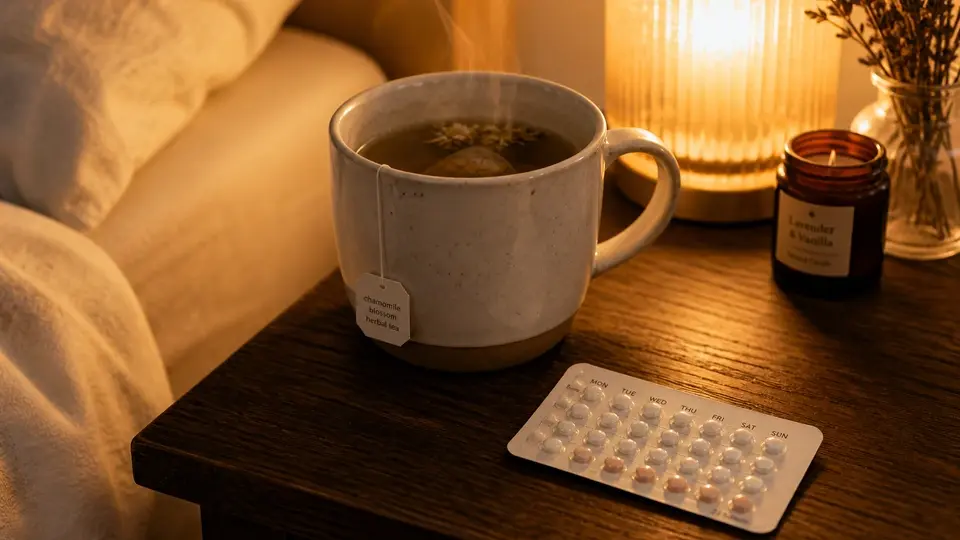
Contraceptive methods differ in how hormones enter the body and how much they rely on gastrointestinal absorption or hepatic metabolism. Combined oral contraceptives contain estrogen and a progestin. Progestin-only pills have their own dosing rules. Patches, rings, implants, and hormonal IUDs use different delivery routes and pharmacokinetic profiles. A copper IUD contains no hormones, but that does not turn every herbal product into a risk-free choice; other medication, bleeding, allergy, and health-history questions can still matter.
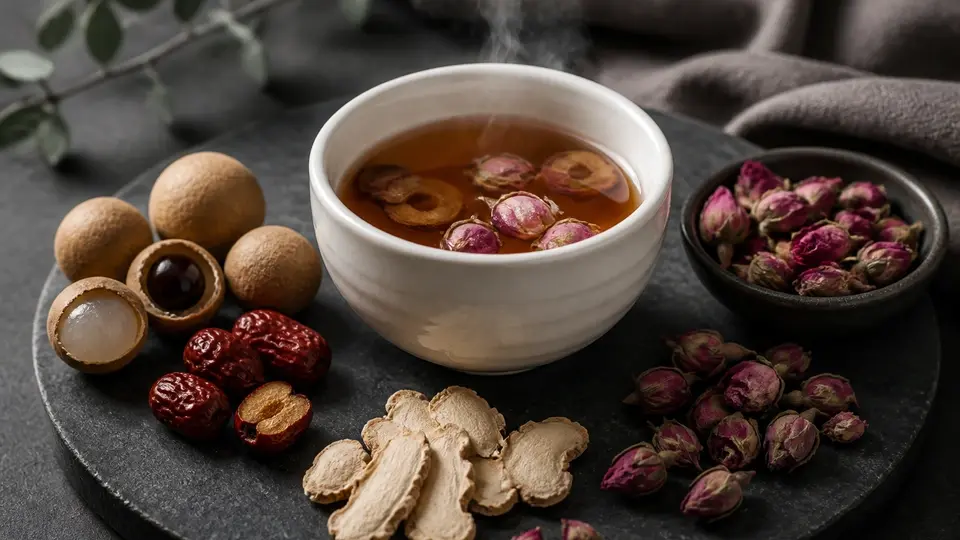
The herb list also matters. Ease Tea is described as containing longan, red dates, wolfberry, Angelica sinensis, dried ginger, flowers, and peony petals. Angelica sinensis has shown estrogenic activity in laboratory work, but laboratory activity does not establish that a cup of this tea changes contraceptive hormone levels or reduces contraceptive effectiveness [1]. It is a reason to disclose the ingredient and ask a professional, not a reason to announce contraceptive failure.
Pure Tea is described as containing lotus leaf, cassia seed, moringa, mulberry leaf, and green tea. Green tea contributes caffeine. A small pharmacokinetic study found slower caffeine elimination in women taking oral contraceptives, which may matter to people who notice jitteriness or sleep disturbance [3]. That finding does not show that green tea makes contraception less effective, and an unsupported fixed clearance percentage should not be used as a product fact.
A birth-control interaction is not the same thing as an unpleasant side effect. It is also not the same thing as a laboratory possibility. The useful question is whether there is credible evidence for a clinically meaningful interaction with the exact method and dose.
Reviewing the Four Tea Labels One by One
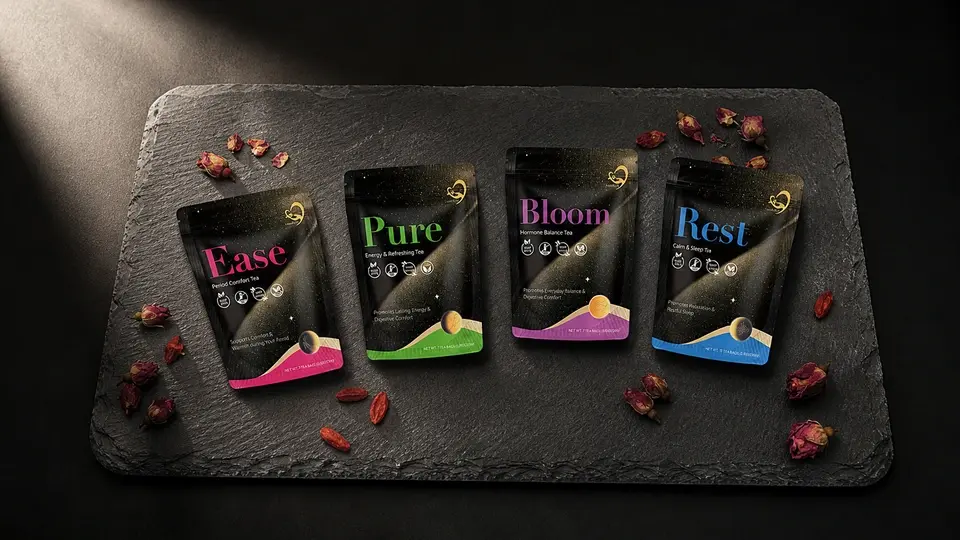
Each blend in the cycle syncing tea set should be reviewed on its own terms. The following descriptions use the supplied product information and do not turn ingredient tradition or laboratory findings into contraceptive claims.
Ease Tea is described as the menstrual-phase blend, with longan, red dates, wolfberry, Angelica sinensis, dried ginger, flowers, and peony petals. Angelica sinensis has laboratory evidence relevant to estrogenic activity, but there is no established clinical evidence here showing that the finished tea changes the efficacy of a contraceptive. Anyone using hormonal contraception should still disclose the ingredient to a pharmacist or clinician.
Pure Tea is described as the follicular-phase blend, with lotus leaf, cassia seed, moringa, mulberry leaf, and green tea. Its caffeine content may matter to people who are sensitive to caffeine or who notice insomnia, palpitations, or jitteriness. That is a tolerability question, not evidence that the tea reduces contraceptive protection. Oral contraceptives can alter caffeine clearance, but a small pharmacokinetic study does not justify a precise percentage for every person or every green tea serving [3].
Bloom Tea is described as the ovulation-phase blend, containing flos lonicerae, rose, ginger, brown sugar, and jujube. Ginger has not been established as a cause of contraceptive failure in ordinary food or tea use, but "no established interaction" should not be rewritten as "proven safe for everyone." The dose, extract strength, other medicines, and personal history still matter.
Rest Tea is described as the luteal-phase blend, with cinnamon, nettle leaf, raspberry, ginger, spearmint, lemongrass, and ashwagandha. Direct clinical interaction data between this finished tea and contraceptives are limited. The lack of a confirmed interaction is not a universal compatibility certificate, especially when the product, dose, and duration differ from any available research.
Use these label summaries as a starting point for a medication review. They are not a substitute for the current package label or batch documentation.
What Is Known—and Unknown—About Herb–Drug Interactions
St. John’s wort remains the clearest example of why herbal interaction questions deserve respect. Official contraceptive guidance warns that it may decrease the effectiveness of some hormonal contraceptives, including through enzyme induction and changes in hormone exposure [4]. It is not included in Laicuherb’s four listed blends, so the example should not be used to imply that this tea set has the same interaction.
For Angelica sinensis, estrogenic activity has been reported in laboratory or extract research, but that does not show a clinically meaningful interaction with a contraceptive when a person drinks a mixed tea. For green tea, human research has examined caffeine metabolism and certain extract-related enzyme questions, but those findings do not support the claim that ordinary green tea makes birth control fail [2]. For ashwagandha, direct evidence with contraceptives remains limited; "no confirmed interaction" is the accurate level of confidence.
Older reviews of herbs marketed for women and dietary supplement–drug interactions also explain why a full ingredient and medication review matters, but they do not establish that this tea set changes contraceptive efficacy [5][6].
Tea also has variable concentrations. A study of an isolated extract does not automatically describe a brewed sachet. A traditional use does not equal a pharmacokinetic study. An interaction listed in a database may be theoretical, minor, uncertain, or clinically important depending on the method and dose. If you want to review a specific batch before starting, ask Laicuherb for the current ingredient list and quality documents at hello@laicuherb.com, then show those details to a pharmacist or clinician.
Current evidence does not establish universal safety for every tea, every contraceptive, or every user. This article does not present herbal tea as medical treatment or contraceptive advice.
Questions to Ask a Pharmacist or Clinician
Bring the exact tea label and the exact contraceptive name. Ask whether any ingredient is known to induce drug-metabolizing enzymes, change hormone exposure, affect bleeding, worsen a condition, or interact with another medicine or supplement you use.
Ask whether your method changes the answer. Mention whether you use a combined pill, progestin-only pill, patch, ring, implant, hormonal IUD, copper IUD, injection, emergency contraception, or a non-hormonal method. Ask whether the tea’s caffeine matters to your sleep, anxiety, palpitations, or other medicines.
Ask what to do if you have vomiting or severe diarrhea after taking an oral contraceptive, because impaired absorption is a separate issue from herb–drug metabolism. Ask what backup contraception, if any, is appropriate after a missed pill or a known interaction. Do not assume that spacing a tea several hours away from a pill solves an enzyme-induction problem; timing advice must come from the contraceptive instructions or a professional.
Ask which symptoms require stopping the tea and which require urgent medical care. Breakthrough bleeding, nausea, diarrhea, mood changes, headaches, breast tenderness, or sleep disruption may have many causes. They should not automatically be interpreted as proof that the tea changed contraceptive hormone levels.
Warning Signs and When to Stop Using
Stop the new tea and contact a pharmacist or clinician if you develop a concerning reaction such as rash, swelling, breathing difficulty, severe vomiting, persistent diarrhea, marked palpitations, or a significant change that begins after starting the product. Seek urgent care for severe symptoms or signs of a serious allergic reaction.
Breakthrough bleeding can occur for many reasons, including missed pills, normal adjustment, illness, medication interactions, or the contraceptive itself. It is worth reporting, but it does not prove that a tea has reduced contraceptive efficacy. If you have severe diarrhea or vomit soon after taking an oral contraceptive, follow the official missed-pill or sick-day guidance for that contraceptive and speak with a pharmacist promptly.
After emergency contraception or a missed pill, do not create a new self-directed schedule by adding or removing herbs. Follow the instructions for the emergency contraceptive or missed dose, use backup contraception when directed, and ask a clinician or pharmacist about the tea. Never change or stop a contraceptive regimen without appropriate advice.
If a tea is making you unwell, stopping a beverage is usually straightforward. The higher-stakes decision is what to do with contraception, and that decision should not be made from a wellness blog.
Conclusion
A cycle syncing tea set can offer a structured way to choose different herbal beverages across the menstrual, follicular, ovulation, and luteal phases. That structure does not create a universal safety label. Each blend has its own ingredients, and each contraceptive method has its own interaction profile.
The strongest practical rule is simple: check the exact label, identify the exact contraceptive, and ask a pharmacist or clinician about the combination. St. John’s wort is a well-established interaction concern for some hormonal contraceptives, but it is not listed in the four blends. Angelica laboratory findings, green-tea caffeine questions, and limited ashwagandha data should be described as context and uncertainty—not as proof of contraceptive failure or proof of compatibility.
Laicuherb’s teas are discussed here as herbal wellness beverages. They are not hormone regulators, contraceptive aids, or substitutes for contraceptive advice. Bring the full ingredient list and current batch documents to the conversation, and let method-specific guidance—not a blanket marketing claim—make the decision.
FAQ
Q: Can I drink the cycle syncing tea set while taking combination birth control pills?
A: There is no single answer for every pill and all four blends. Review the exact ingredients and the specific contraceptive with a pharmacist. Ease Tea contains Angelica sinensis, which has shown estrogenic activity in laboratory work, but that does not prove that the finished tea changes contraceptive efficacy [1]. Pure Tea contains green tea and therefore caffeine; oral contraceptives can affect caffeine metabolism in some people, but that is not evidence that green tea reduces contraceptive protection [2][3]. Do not rely on a generic "safe" or "unsafe" label.
Q: Does the cycle syncing tea set interact with a hormonal or copper IUD?
A: A copper IUD is non-hormonal, while a hormonal IUD releases levonorgestrel locally. Those methods are different from oral contraception, but the exact tea ingredients, other medicines, allergies, bleeding pattern, and health history still matter. There is not enough product-specific evidence to issue a universal compatibility statement for the four-tea set. Ask a clinician or pharmacist to review the current ingredient list, and do not interpret "no known interaction" as a guarantee.
Q: Should I avoid the cycle syncing tea set after taking emergency contraception or if I missed a pill?
A: Do not use a new tea routine to manage an emergency contraception or missed-pill situation. Follow the product instructions and official contraceptive guidance first. If vomiting or severe diarrhea could have affected absorption of an oral pill, ask a pharmacist what backup contraception or repeat dosing is appropriate. After emergency contraception, ask when to restart or continue your regular method and whether any additional precautions are needed. The tea can wait while the higher-priority contraceptive question is handled.
Choose Laicuherb for Transparent Ingredient Lists
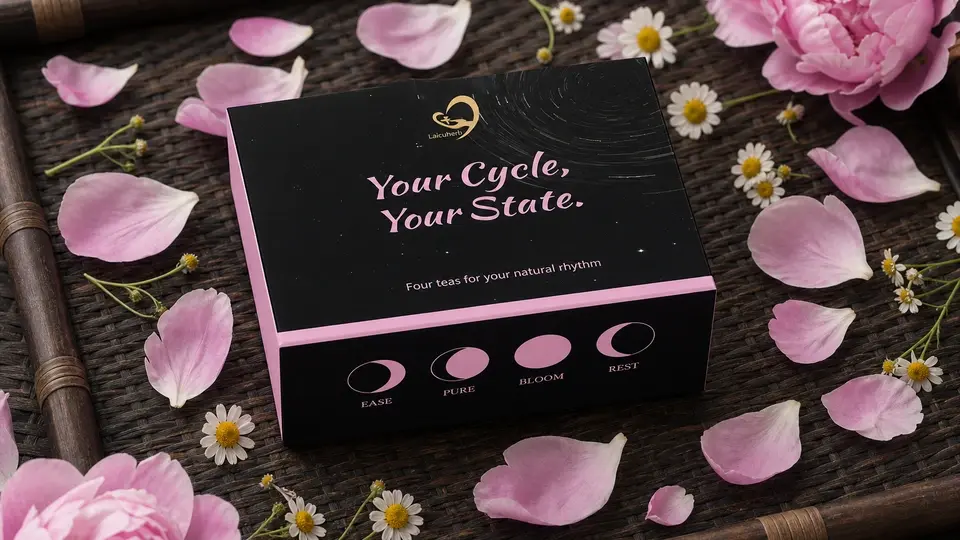
Laicuherb’s cycle syncing tea set is described as four blends matched to the menstrual, follicular, ovulation, and luteal phases. The useful feature for an interaction review is not a promise of universal compatibility. It is the ability to inspect each blend’s ingredient list and compare it with your current medicines and contraceptive method.
Laicuherb provides supplied quality documents including ISO-FSSC, COA, and COI documentation for batch traceability. Those documents support transparency about production and testing. They do not replace a pharmacist’s interaction assessment or prove that a tea is clinically compatible with every contraceptive.
If you need the current ingredient panel or batch-specific documentation for a pharmacy consultation, contact hello@laicuherb.com. Bring the information to a professional, ask the method-specific questions, and make the decision with the facts in front of you.
About the Author

Laicuherb
Laicuherb is a modern dietary supplement company specializing in rhythm-aligned botanical formulations. By merging traditional herbal wisdom with modern extraction techniques, the company produces high-purity functional teas and concentrated nutritional supplements. Laicuherb oversees raw material sourcing, supercritical extraction, and third-party laboratory verification, establishing an authentic, high-quality standard for health-conscious consumers worldwide.
Scientific References & Literature Support
- Circosta, C., Pasquale, R. D., Palumbo, D. R., Samperi, S., & Occhiuto, F. (2006). Estrogenic activity of standardized extract of Angelica sinensis. Phytotherapy Research, 20(8), 665–669. [PubMed PMID: 16817173]
- Donovan, J. L., Chavin, K. D., Devane, C. L., et al. (2004). Green tea (Camellia sinensis) extract does not alter cytochrome P450 3A4 or 2D6 activity in healthy volunteers. Drug Metabolism and Disposition, 32(8), 907–913. [PubMed PMID: 15258117]
- Patwardhan, R. V., Desmond, P. V., Johnson, R. F., et al. (1980). Impaired elimination of caffeine by oral contraceptive steroids. Journal of Laboratory and Clinical Medicine, 95(4), 603–608. [PubMed PMID: 7358941]
- U.S. Centers for Disease Control and Prevention. (2024). U.S. Medical Eligibility Criteria for Contraceptive Use, 2024; drug-interaction guidance for St. John’s wort and hormonal contraceptives.
- Hardy, M. L. (2000). Herbs of special interest to women. Journal of the American Pharmaceutical Association, 40(2), 234–242. [PubMed PMID: 10763595]
- Smolinske, A. (1999). Dietary supplement-drug interactions. Journal of the American Medical Women’s Association, 54(4), 191–196. [PubMed PMID: 10555314]
Related Readings
- Period Tea and Pain Medication: Complementary Roles, Not Substitutes
Read Article → - What is the Best Buy Amenorrhea Remedies Products You Should Consider?
Read Article → - From Morning Energy to Menstrual Ease: How Laicuherb Aligns with Your Daily Rhythms
Read Article →