Sea Buckthorn Oil When Pregnant or Breastfeeding: What to Ask First






Table of Contents
1. Quick Answer: Ask a Clinician Before Taking the Softgel →
2. What Sea Buckthorn Oil Can Provide →
3. What the Label Can Confirm →
4. What the Label Cannot Confirm →
5. Questions to Ask During Pregnancy →
6. Questions to Ask While Breastfeeding →
7. If You Are Considering It for Dryness →
Quick Answer: Ask a Clinician Before Taking the Softgel
There is not enough pregnancy- or breastfeeding-specific evidence to make a general recommendation for sea buckthorn oil softgels. The NIH Office of Dietary Supplements notes that pregnancy supplement decisions should be based on established nutrient guidance and individual clinical needs, while LactMed’s Buckthorn entry is the relevant reference for breastfeeding exposure. Neither source provides a general green light for sea buckthorn oil softgels.
That does not tell you that the product is harmful, and it does not confirm that it is appropriate for you. It means the decision needs to be made with the full product information and your own health history in view.
A clinician may consider your stage of pregnancy or breastfeeding, current medicines, allergies, planned procedures, medical conditions and the other nutrients in your prenatal or postnatal routine. Until you have that conversation, do not treat a sea buckthorn oil supplement as a routine pregnancy nutrient or as a replacement for a recommended prenatal product.
What Sea Buckthorn Oil Can Provide
Sea buckthorn oil comes from the seed, fruit pulp or a combination of both. These fractions have different fatty-acid profiles. Fruit pulp oil is commonly associated with palmitoleic acid, also called omega-7, while seed oil contributes a different balance of fatty acids, including omega-3 and omega-6.
A whole-berry oil combines material from more than one part of the fruit. It can provide a mixture of omega-3, omega-6, omega-7 and omega-9 fatty acids, along with naturally occurring carotenoids, tocopherols and plant sterols. Reviews describe sea buckthorn oil as a promising source of these compounds, but much of the evidence concerns composition, laboratory work or non-pregnant populations. These are nutritional characteristics of the oil, not pregnancy-specific safety findings, and they do not replace nutrients recommended by your maternity care team. You can review the composition background in this sea buckthorn oil review.
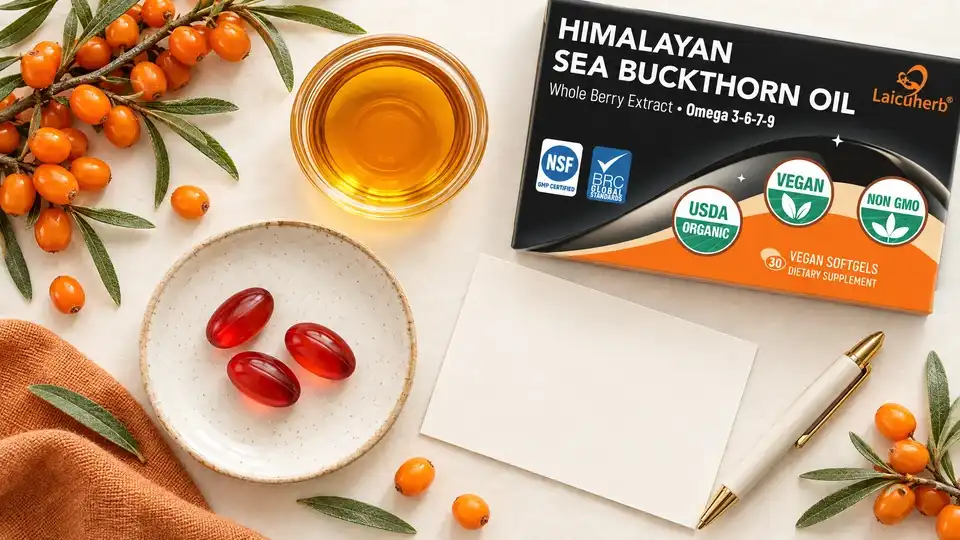
The product page for cardiovascular/himalayan-sea-buckthorn-oil" style="color:#fb923c;text-decoration:underline;">Laicuherb Himalayan Sea Buckthorn Oil describes a whole-berry organic sea buckthorn oil in a vegan softgel and lists its fatty acids and other naturally occurring compounds. Read that information as the product profile you can bring to an appointment, not as a pregnancy-use recommendation.
What the Label Can Confirm
The current Supplement Facts panel lists two softgels as one serving and provides 1,000 mg of organic sea buckthorn oil. It lists 324 mg of omega-7, 245 mg of omega-9, 103 mg of omega-6, 22 mg of omega-3 as ALA, 1.5 mg of vitamin E, 150 mcg of vitamin A as beta-carotene, 20 mg of plant sterols and 500 mcg of natural carotenoids.
The capsule contains tapioca starch, vegetable glycerin and purified water. The product information also lists gluten-free, soy-free and dairy-free characteristics. These details can help a clinician check for dietary restrictions, overlapping ingredients and possible questions about your current supplement routine.
The beta-carotene entry also needs to be read in context. Beta-carotene is different from preformed vitamin A such as retinol, and the NIH vitamin A fact sheet distinguishes the two forms. That distinction does not make the softgel automatically appropriate during pregnancy. Add the product to the full list of vitamin A and carotenoid sources you already use and let your clinician review the total picture.
What the Label Cannot Confirm
A Supplement Facts panel can identify ingredients and amounts. It cannot confirm that the product has been studied in pregnant people, that its ingredients pass into breast milk in a known way, or that the listed serving is right for you.
Certification and manufacturing information answer another question. cGMP, BRC or other quality standards can describe how a product or facility is made and controlled. A COA can report testing for a particular batch. These documents are useful when checking identity, purity and manufacturing controls, but they do not establish pregnancy or breastfeeding safety.
The same boundary applies to the extraction method. Supercritical carbon dioxide extraction describes how oil is obtained. It does not turn a dietary supplement into a clinically tested pregnancy product.
Questions to Ask During Pregnancy
Bring the bottle, Supplement Facts panel and the full list of medicines and supplements you take. Ask whether the product is appropriate for your current trimester, whether it overlaps with your prenatal vitamin, and whether the beta-carotene, vitamin E, fatty acids or other listed compounds create a reason to avoid it.
Ask whether you should wait until after delivery, whether the supplement should be paused before a planned procedure, and whether a different source of dietary fat or omega-3 is more appropriate for your nutritional goal. If you are considering sea buckthorn oil for dryness, explain the symptom rather than asking only whether the oil is safe. Dry eyes, skin changes or intimate discomfort can have several causes during pregnancy and may need a different form of care.
Questions to Ask While Breastfeeding
Breastfeeding adds a second layer of uncertainty because the relevant question is not only whether the mother tolerates the supplement. It is also whether its components have been studied in lactation and whether exposure through breast milk is understood.
Ask your clinician or pharmacist whether the full formula is appropriate while nursing, whether any ingredient has known lactation data, which changes in you or your baby should be reported, and whether your current prenatal or postnatal supplement already provides overlapping nutrients. Do not assume that a vegan capsule or a food-derived oil has been adequately studied simply because its ingredients sound familiar.
The limited evidence around many herbal products is a reason for an individualized review, not a reason to make a blanket safety claim in either direction. LactMed’s clinical guidance for herbal products also emphasizes checking the specific herb, the mother’s situation and possible infant exposure rather than assuming that a food-derived product is automatically suitable.
If You Are Considering It for Dryness
Pregnancy and postpartum dryness can affect the eyes, skin, mouth or intimate tissues. Hormonal changes, fluid intake, sleep disruption, indoor air, allergies, medicines and other health factors can all contribute.
Sea buckthorn oil may be discussed as a source of plant-based lipids and oil-soluble compounds, but it cannot identify the cause of dryness. Persistent, painful or worsening symptoms should be assessed by the appropriate healthcare professional. Oral oil should not replace eye drops, gynecological care, treatment for infection or any care recommended by your clinician.
When to Wait Before Starting Any New Supplement
Wait for professional guidance if you are pregnant or breastfeeding and the product has not been reviewed with your care team, if you take prescription medicines, if you have a bleeding disorder, if surgery is planned, if you have a history of allergies, or if you are managing a chronic condition.
Also pause the shopping decision if you are trying to use the softgel to manage a symptom that is severe, new or getting worse. The more important question may be why the symptom is happening, not which oil to add.
Conclusion
Sea buckthorn oil can provide a whole-berry mixture of fatty acids and naturally occurring oil-soluble compounds. A product label can show the source, serving size, capsule ingredients and quality information. Neither one can establish that a softgel is suitable during pregnancy or breastfeeding.
If you are considering Laicuherb Himalayan Sea Buckthorn Oil, bring the full Supplement Facts panel to your OB-GYN, midwife or pharmacist. Ask about the serving, the beta-carotene and vitamin E, overlap with your prenatal or postnatal supplements, current medicines and the limited pregnancy or lactation evidence. Let the oil profile inform the conversation, and let your care team guide the decision.
LABEL INFORMATION IS NOT SAFETY CLEARANCE
Bring the complete label, medication list and prenatal or postnatal supplement list to your care team before starting a softgel.
FAQ
Q: 1. Is sea buckthorn oil pregnancy use considered safe?
A: There is not enough pregnancy- or breastfeeding-specific evidence to give a general answer. Bring the product label and your full supplement and medication list to an OB-GYN, midwife or pharmacist before taking it.
Q: 2. What does Laicuherb Himalayan Sea Buckthorn Oil contain?
A: The current label lists two softgels per serving, 1,000 mg of organic whole-berry sea buckthorn oil, 324 mg of omega-7, 245 mg of omega-9, 103 mg of omega-6, 22 mg of omega-3 as ALA, vitamin E, beta-carotene, plant sterols and natural carotenoids.
Q: 3. Is beta-carotene the same as retinol?
A: No. Beta-carotene and preformed vitamin A such as retinol are different forms. The NIH Office of Dietary Supplements distinguishes them, but your clinician should still review the complete supplement list during pregnancy.
Q: 4. Does organic or certified production prove pregnancy safety?
A: No. Organic and manufacturing certifications can provide information about sourcing and production controls. They do not replace pregnancy- or breastfeeding-specific safety data or individualized medical advice.
Q: 5. What should I bring to my appointment?
A: Bring the bottle or full Supplement Facts panel, your prenatal or postnatal supplement label, a list of medicines and a note about your stage of pregnancy or breastfeeding. This gives your clinician the information needed to review overlap and possible concerns.
References
1. National Institutes of Health, Office of Dietary Supplements. Vitamin A and Carotenoids: Health Professional Fact Sheet.
2. National Institutes of Health, Office of Dietary Supplements. Dietary Supplements and Life Stages: Pregnancy.
3. National Institutes of Health, LactMed. Advice for Clinicians on Herbs and Breastfeeding.
Related Readings
Cycle Tracking Apps vs a Tea Ritual Log
When Period Comfort Tools Are Not Enough
Period Breakouts vs Barrier Dryness: Why Skin Glow Is Not an Acne Treatment