Period Pain: Ibuprofen vs Herbal Tea — When to Use Each






This article reflects general health science and published medical-authority guidance. It does not replace professional medical advice, diagnosis, or treatment.
Table of Contents
→ Quick Answer: Different Mechanisms, Both Have a Role
→ How NSAIDs Like Ibuprofen Work on Menstrual Cramps
→ What Herbal Period Tea Can and Cannot Do
→ Head-to-Head: Onset, Duration, Target, Side Effect Profile
→ How to Layer Both Without Conflict
Cramps hit, and the search splits in two: an NSAID on the label, or a warm herbal bag. Those are not two strengths of the same pain tool. Ibuprofen is a medicine that can reduce prostaglandins behind many period cramps [1][3]. Laicuherb Ease Period Comfort Tea is a caffeine-free menstrual-phase drink — longan, red dates, wolfberry, angelica, dried ginger, Pingyin rose, and peony petals, 8 g × 7 bags — sold for warmth and a slower cup, not as a painkiller [6].
The product page is blunt: Ease Tea cannot replace pain-relief medicine, and it is not intended to diagnose, treat, cure, or prevent any disease [6]. This article keeps that line.
Quick Answer: They Have Different Mechanisms — Both Have a Role
Ibuprofen (and other NSAIDs) block cyclooxygenase (COX) enzymes that make prostaglandins. High prostaglandin output is a main driver of primary dysmenorrhea — the cramping that comes with a period when no pelvic disease has been found [1][3]. Cochrane’s review of 80 trials found NSAIDs more likely than placebo to give moderate or excellent pain relief, with more stomach and other side effects than placebo [3].
A period tea does not run that pathway at a studied clinical dose. Ease Tea is a hot, caffeine-free herbal infusion for the bleeding days: sweetness from dates, longan, and wolfberry; warmth from ginger and angelica; florals from rose and peony [6]. Heat and a pause can sit next to medicine the way a heating pad sits next to medicine [5]. That is not “systemic relief” and not a prostaglandin block.
Use ibuprofen when you need a labeled analgesic. Use the tea when you want a warm menstrual-phase beverage. Severe, worsening, or function-stopping pain is a medical visit, not a second bag.
How NSAIDs Like Ibuprofen Work on Menstrual Cramps
During menses the uterus contracts and sheds lining. The lining releases prostaglandins, which intensify contractions and can travel with nausea, diarrhea, or headache [1][5]. NSAIDs inhibit COX, which cuts prostaglandin production. That is why they are first-line tablets for many people with primary dysmenorrhea [1][3].
ACOG notes that a pain reliever such as ibuprofen may ease cramps, and that it may work better if started one to two days before bleeding and continued through the first two to three days — follow the package or your clinician, not a blog dose [5]. Hormone methods (pills, hormonal IUD) are another medical option when tablets are not enough [5].
Ibuprofen is still a drug: stomach upset, and other risks in people with ulcers, kidney disease, some heart conditions, or those already on other NSAIDs or blood thinners. It does not treat endometriosis or fibroids. It treats pain in many primary-cramp studies [3].
What Herbal Period Tea Can and Cannot Do
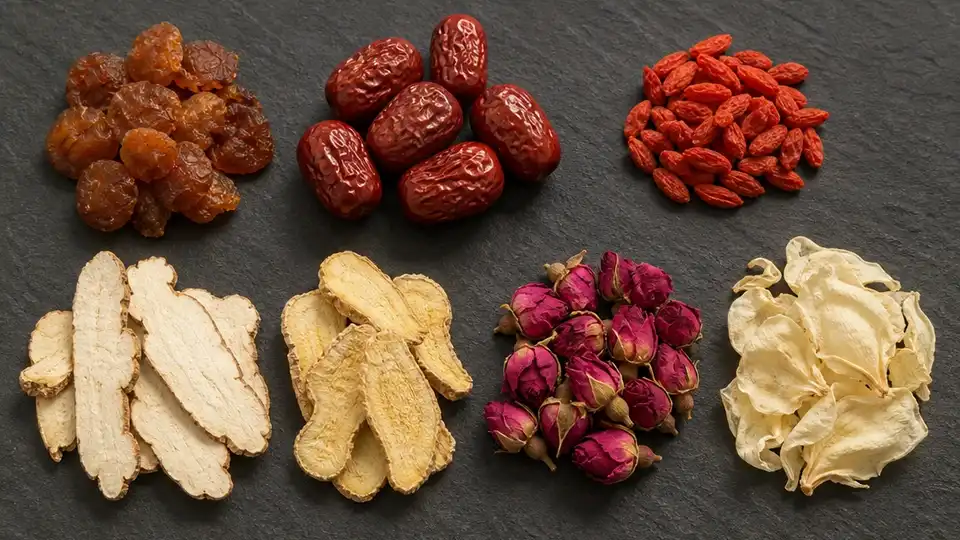
Ease Period Comfort Tea can be brewed when bleeding starts, or one to two days before if you already track your cycle. One sachet, freshly boiled water, steep per the pack [6]. The formula on the site does not list green or black tea, so it is presented as caffeine-free; check the physical label if you must avoid caffeine entirely [6].
What it cannot do, per the same page: replace ibuprofen or other pain medicine; diagnose or treat disease; stand in for a gynecologist when cramps are severe or persistent [6]. There is no published trial of this seven-herb bag against dysmenorrhea endpoints. Ginger in other forms has a separate evidence file; that file is not this sachet.
Warmth in a mug is closer to ACOG’s self-care list (bath, heating pad, sleep) than to a COX inhibitor [5]. Enjoy it as a menstrual-phase ritual. Do not wait on tea if you cannot work, study, or stand.
Head-to-Head: Onset, Duration, Target, Side Effect Profile
| Ibuprofen (typical OTC NSAID) | Ease Period Comfort Tea | |
|---|---|---|
| Legal class | Medicine | Herbal beverage [6] |
| Target in research | COX / prostaglandin pathway in primary dysmenorrhea [1][3] | Not studied as a finished blend for cramp scores |
| Onset | Many people feel an effect within about an hour — follow the Drug Facts label | Heat of the cup; no analgesic onset data |
| Duration | Hours per labeled dose | Length of the drink and the pause |
| Evidence bar | 80 RCTs in Cochrane NSAID review; direction vs placebo is pain relief [3] | Product positioning and brewing directions [6] |
| Side effect profile | GI and other adverse effects more common than placebo [3]; interactions and contraindications apply | Food-grade herbs; still ask a clinician if pregnant, nursing, on drugs, or managing a condition [6] |
“Zero pharmaceutical burden” is marketing. A daily cup is still an ingestible. Ibuprofen is not “holistic vs not”; it is a prostaglandin tool with a side-effect profile.
How to Layer Both Without Conflict

They do not share a proven drug–herb interaction map that says “never combine.” They also do not form a tested combo protocol. If you already take ibuprofen as directed, a caffeine-free warm cup does not cancel the tablet and does not replace the next dose.
Keep jobs split. Medicine for pain you have decided needs a medicine. Tea for hydration and a warm menstrual-phase pause [6]. Do not skip a labeled dose because the mug is in your hand. Do not stack extra ibuprofen because the tea “didn’t kick in.”
If you take prescription drugs, have stomach or kidney disease, or bleed heavily, ask a pharmacist or clinician before adding either a new NSAID pattern or a daily angelica-ginger blend.
When Pain Needs Medical Evaluation (Not More Tea)
If pain is severe, worse than your usual, or makes school, work, or daily life hard — consult an ob-gyn. Do not wait on tea or extra tablets.
ACOG: more than half of people with periods have some pain one to two days a month. Ask an ob-gyn anytime. It is especially important if pain is severe, worse than your usual, or makes school, work, or daily life hard [5]. Pain that does not ease with usual OTC doses, that climbs cycle after cycle, or that lasts beyond bleeding, needs an exam — endometriosis, adenomyosis, fibroids, and ovarian cysts are among the conditions that can sit under “just cramps” [5].
Tea and extra pills are the wrong next step there. Fever, fainting, soaking through protection hourly, pain with sex, or pain that starts days before bleeding and does not stop after: get care.
Conclusion
Ibuprofen can reduce prostaglandin-driven cramps in primary dysmenorrhea trials, with real side effects [1][3]. Ease Period Comfort Tea is a caffeine-free seven-herb drink for menstrual-phase warmth, not a pain medicine [6]. Layer them only as separate jobs. Red-flag pain belongs with a clinician, not a second infusion.
FAQ
Q: Can herbal period tea completely replace ibuprofen during severe cramps?
No. Ease Tea is not a substitute for pharmaceutical pain relievers. If cramps are severe, see a healthcare professional [6].
Q: Are these herbal teas suitable for topical use or cooking?
No. Ease Tea is for brewing and drinking. One sachet, boiled water, steep per the package [6].
Q: When should I consult a doctor regarding my menstrual pain?
When pain is severe, worse than usual, stops you from functioning, or does not respond to standard OTC use. Underlying conditions may need diagnosis and a different plan [5].
Embrace Harmonious Cycle Support with Laicuherb
Ease Period Comfort Tea is 8 g × 7, menstrual-phase, caffeine-free as declared, for a warm cup beside — not instead of — medical care [6].
Ease Period Comfort Tea
Caffeine-Free | 8 g × 7 bags | ISO-FSSC | HACCP | HALAL
Product page: Ease Period Comfort Tea. Questions: hello@laicuherb.com.
References
[1] Dawood, M. Y. (2006). Primary dysmenorrhea: Advances in pathogenesis and management. Obstetrics & Gynecology, 108(2), 428–441.
[2] Proctor, M., & Farquhar, C. (2006). Diagnosis and management of dysmenorrhoea. BMJ, 332(7550), 1134–1138.
[3] Marjoribanks, J., Ayeleke, R. O., Farquhar, C., & Proctor, M. (2015). Nonsteroidal anti-inflammatory drugs for dysmenorrhoea. Cochrane Database of Systematic Reviews, Issue 7, Art. No. CD001751. https://www.cochrane.org/evidence/CD001751_nonsteroidal-anti-inflammatory-drugs-dysmenorrhoea
[4] ACOG Committee Opinion No. 760. (2018). Dysmenorrhea and endometriosis in the adolescent. Obstetrics & Gynecology, 132(6), e249–e258.
[5] American College of Obstetricians and Gynecologists. (2020, last reviewed May 2026). Painful periods. https://www.acog.org/womens-health/faqs/painful-periods
[6] Laicuherb. Ease Period Comfort Tea. https://www.laicuherb.com/cycle-harmony/ease-period-comfort-tea
Related Readings
Himalayan Sea Buckthorn Oil: How to Read a COA Before Buying
Energy Tea vs Matcha: Which Fits a Follicular-Phase Routine?
What is Laicuherb? “State” — The Leader in Dietary Supplements
|
SJ
|
Dr. Sarah Jenkins Women's Health & Menstrual Wellness Specialist Reviewed for menstrual health clinical accuracy. This article reflects published health authority guidance and does not substitute for professional medical evaluation. |