Is Fertility Tea the Key to Managing Hormonal Fluctuations? The Science Behind Herbal Wellness






Quick Summary
"Phytoestrogens binding to hormone receptors" is real plant biochemistry — just not something most of the ingredients in a typical wellness tea blend, including this one, are well-documented sources of. This guide separates the real science of hormonal fluctuation from the marketing language often layered on top of it, and looks honestly at whether a Fertility Tea can actually do what its name implies.
This article reflects general research and traditional herbal use, not medical advice. If fertility or a diagnosed hormonal condition is your concern, talk to a doctor rather than relying on herbal tea alone.
Q1: Do the ingredients in this kind of tea actually bind to human hormone receptors?
Phytoestrogens are a real, documented category of plant compounds — found in things like soy isoflavones and flaxseed lignans — that can weakly interact with estrogen receptors, sometimes mimicking and sometimes blocking natural estrogen depending on context. That's legitimate biochemistry, worth knowing about in general.
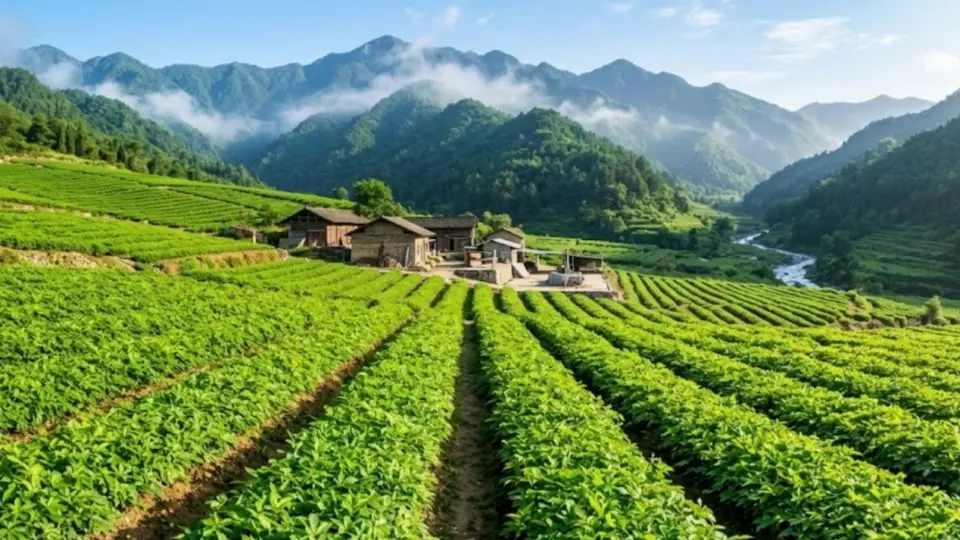
What's worth being precise about: the ingredients typically used in this category of tea (honeysuckle, rose, goji berry, jujube, ginger) are mainly documented for polyphenol and antioxidant content, not for phytoestrogen activity comparable to soy or flaxseed. It would be overstating the evidence to claim this specific blend works through receptor-level hormone modulation — that's a real mechanism in plant biochemistry generally, just not one with direct support for these particular ingredients.
Q2: How is herbal tea different from an actual hormonal medication?
The honest distinction isn't that herbal tea is gentler and medication is harsher — it's that they're different categories of intervention entirely. Hormonal medications are dosed to produce a specific, measurable physiological effect, and that's precisely why they require medical supervision: they're powerful enough to need it. Herbal tea isn't a weaker version of the same thing; it's a different kind of product, generally studied (when it's studied at all) for mild, supportive effects rather than targeted hormonal correction.
It's also worth being fair to medication here rather than using it as a contrast device: prescribed hormonal treatments exist because they reliably do something specific, and "natural is gentler" isn't automatically true — some herbs (ginger, angelica, and others common in this category) have their own interactions and contraindications worth knowing about. The reasonable way to think about herbal tea is as a complementary daily habit, not as an alternative pathway to the same outcome a medication targets.
Q3: Does standardized manufacturing actually change how the tea affects hormones?
Standardization is a real and meaningful manufacturing benefit, just not in the way that's sometimes implied. Wild-harvested or loosely sourced herbs genuinely do vary in potency batch to batch — weather, soil, and harvest timing all affect a plant's chemical profile. A brand that controls extraction temperature and tests batches for consistency is giving you a more reliable, predictable product.
What standardization doesn't do: make an otherwise-unproven hormonal effect become proven. Consistency improves reliability of whatever the tea actually does — it doesn't expand what that is. If an ingredient doesn't have good evidence for a specific effect, drinking a perfectly standardized version of it doesn't change that.
Q4: Is there a reason to drink this specifically during ovulation rather than any other time?
The ovulation window does involve a real, documented increase in metabolic activity and oxidative stress within the ovarian environment — that part is grounded in actual reproductive physiology. Where it's worth pausing is the next step: claiming that specific flavonoids in a tea blend deliver targeted antioxidant protection to "developing follicular cells" during this exact window is a much more specific physiological claim than the evidence for any of these particular ingredients supports.
The general antioxidant intake is a reasonable, low-risk part of overall wellness, and timing a calming tea ritual to a part of the cycle that some people find more taxing is a reasonable personal habit. It's just not the same as a verified, phase-targeted intervention. For the brand's own framing of how it positions this timing, see how Bloom Hormone Balance Tea supports you during ovulation — worth reading as the brand's product philosophy rather than a clinical claim.
Q5: How do I actually verify a brand's organic and safety claims in an unregulated market?
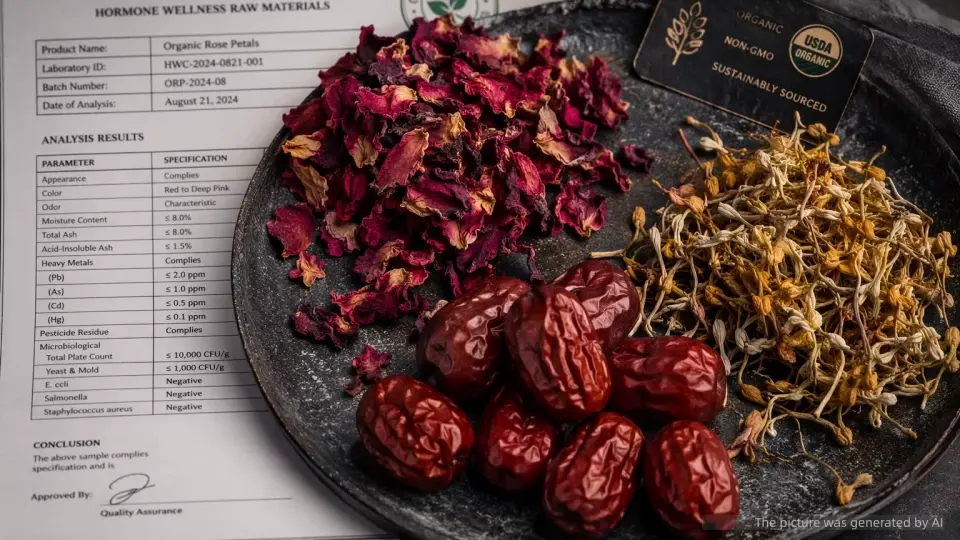
This is a fair concern, but worth approaching without the more alarmist framing sometimes attached to it. Contamination (heavy metals, pesticide residue) is a real and checkable quality risk — the concrete safeguard is a brand that batch-tests and can produce a Certificate of Analysis (COA) on request. That's a verifiable safety signal.
Worth being precise about labeling, too: "Certified Organic" is a specific, regulated label requiring third-party certification of farming practices. Some brands describe their sourcing as organic in a general marketing sense without holding that formal certification — it's reasonable to ask a brand directly which applies. For Bloom Hormone Balance Tea specifically, the certifications stated on the product page are ISO-FSSC, COI, and COA — real, verifiable manufacturing and food-safety certifications, distinct from (and not a substitute for) a formal organic certification.
About Bloom Hormone Balance Tea
Bloom Hormone Balance Tea is formulated for the ovulation phase, part of Laicuherb's four-product Cycle Tea Set. Laicuherb lists ISO-FSSC, COI, and COA as its certifications and states clearly that the product isn't intended to diagnose, treat, or cure any condition — which is also the most honest way to think about its role in supporting fertility specifically: a wellness habit, not a fertility treatment.
Website: https://www.laicuherb.com/
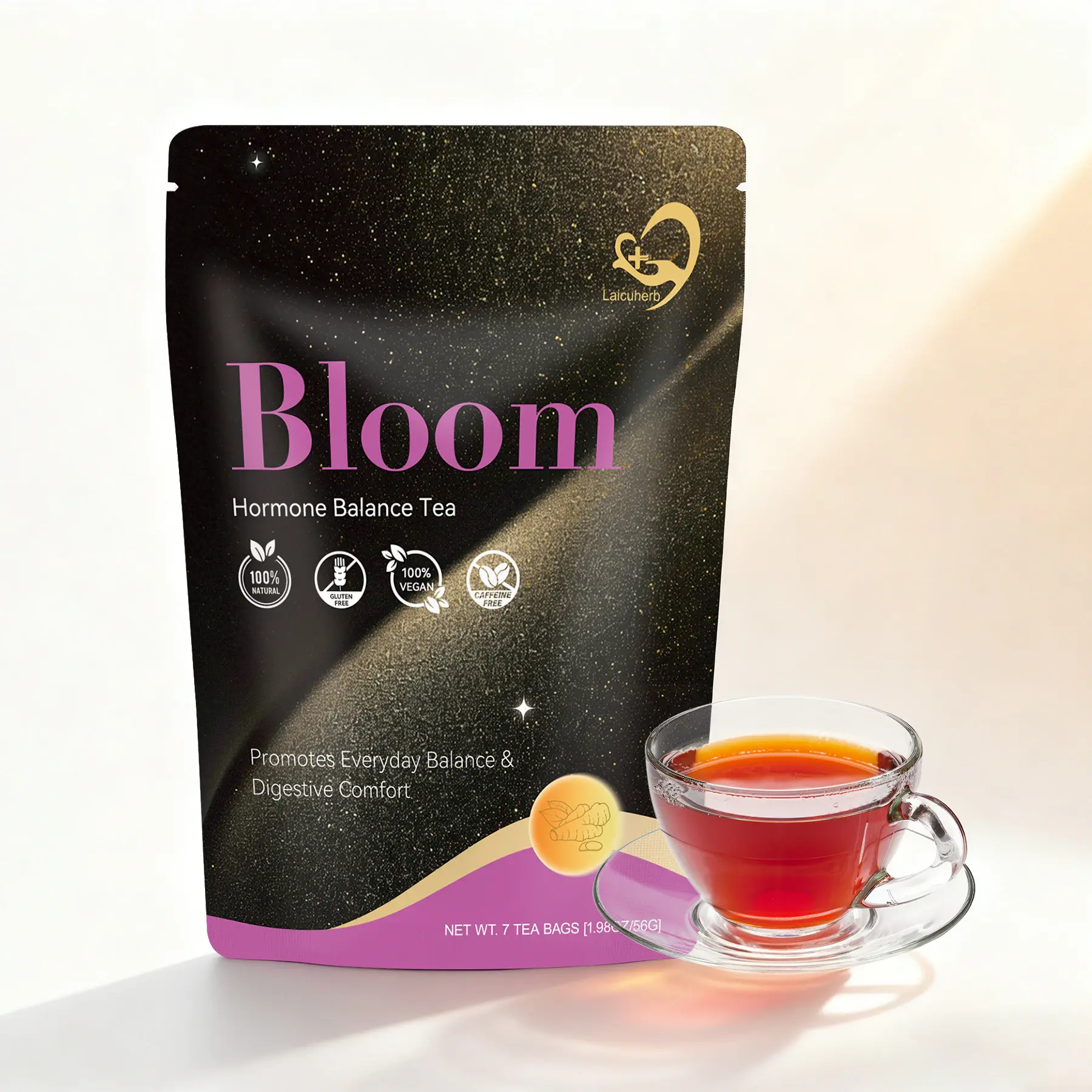
Laicuherb Bloom Hormone Balance Tea
A scientifically packaged, caffeine-free wellness infusion timed for your ovulation peak. Built with gold-and-silver flower and premium goji berries under audited food safety standards.
Buy Bloom Hormone Balance Tea →FAQ
Can this tea actually help me get pregnant?
Be cautious here, and this lines up with the brand's own stated position: Bloom Hormone Balance Tea is designed to support general wellbeing during ovulation, not as a fertility treatment, and there's no clinical evidence it increases conception chances. If pregnancy is the goal, talk to a doctor or fertility specialist rather than relying on tea.
Does "phytoestrogen" mean this tea contains plant hormones?
Not quite — phytoestrogens are plant compounds that can weakly interact with estrogen receptors, but they're not hormones themselves, and the specific ingredients in this blend aren't well-documented phytoestrogen sources (unlike, say, soy or flaxseed). It's a real category of plant chemistry, just not one with strong evidence behind these particular ingredients.
Can I drink this alongside hormonal birth control or fertility medication?
There's no documented interaction between the ingredients here and common hormonal medications, but "no documented interaction" isn't the same as "confirmed safe in combination" — if you're on fertility treatment or hormonal medication, it's worth mentioning any herbal tea you drink regularly to your doctor, just as a precaution.
Why does this tea target the ovulation phase specifically instead of the whole month?
This follows the brand's broader product philosophy of phase-specific teas (Ease for menstruation, Pure for the follicular phase, Bloom for ovulation, Rest for the luteal phase) rather than one blend for the entire cycle. It's a product design choice rooted in traditional wellness logic, not a claim that ovulation-specific timing has been clinically shown to change the tea's effect.
Related Readings
- When to Drink Bloom Hormone Balance Tea in Your Cycle Link Placeholder →
- The Best Herbal Tea to Drink During Your Ovulatory Phase Link Placeholder →
- How to Improve Your Health and Energy Every Day of the Month Link Placeholder →
About the Author
Laicuherb
The core content team at Laicuherb is a collective of experts, nutritionists, and wellness advocates dedicated to translating ancient herbal traditions into modern, scientifically-backed hormonal health guides.