Himalayan Sea Buckthorn Oil and Blood Thinners: What to Ask






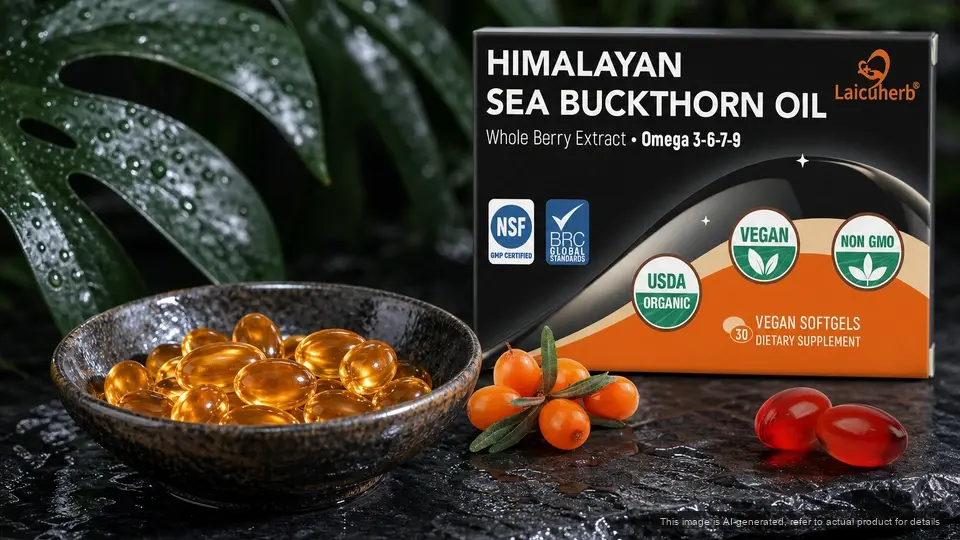
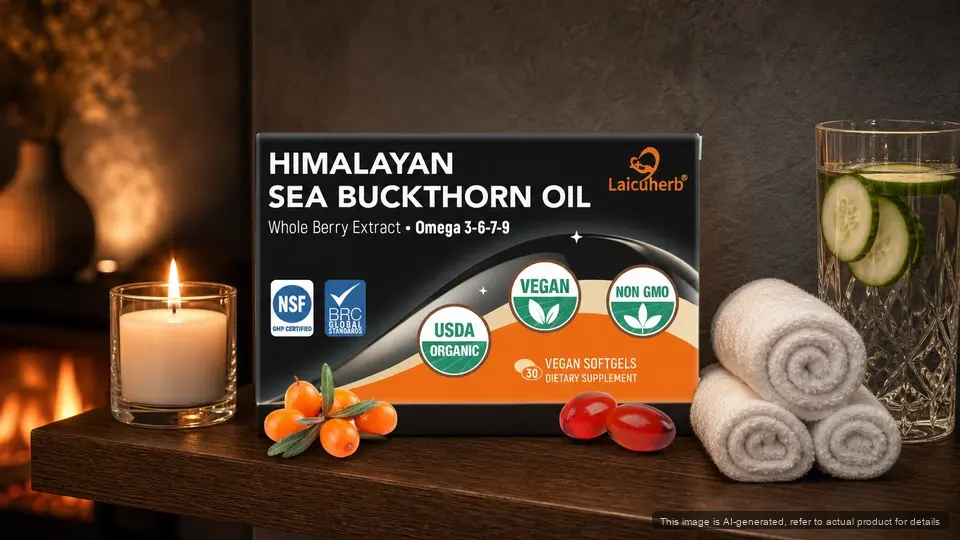
If you take a blood thinner and are considering an omega-rich supplement, asking before you buy is the right move. Himalayan sea buckthorn oil is often presented as a vegetarian alternative to fish oil. Laicuherb describes its cardiovascular/himalayan-sea-buckthorn-oil">Himalayan Sea Buckthorn Oil as a whole-berry product with Omega-3, Omega-6, Omega-7, and Omega-9, wild-collected at high altitude and processed with low-temperature CO2 extraction in facilities described as NSF cGMP- and BRC-certified.
Those product details do not answer the medication question. If you take warfarin, aspirin, a direct oral anticoagulant, or another antiplatelet medicine, the relevant next step is a pharmacist or prescribing clinician who can review the exact label, dose, diagnosis, and bleeding history. This article explains the evidence boundary without telling anyone to change a prescription.
Table of Contents
- → Quick Answer: Do Not Add the Oil Without a Medication Review
- → Why Dietary Oils and Supplements Still Matter
- → What Research Says About Sea Buckthorn and Coagulation
- → What the Evidence Does Not Establish
- → Who Needs Extra Caution
- → Questions to Bring to a Pharmacist or Clinician
- → FAQ (Frequently Asked Questions)
- → Related Readings
Quick Answer: Do Not Add the Oil Without a Medication Review
Do not start Himalayan sea buckthorn oil—or any new supplement—alongside a blood thinner without first checking with your prescribing clinician or pharmacist. Direct human evidence on this specific oil and clinically important bleeding outcomes is limited. Evidence from fish oil or isolated Omega-3 products cannot be treated as proof about a whole-berry sea buckthorn formula.
The question depends on the medicine and the person. Warfarin users may have INR monitoring and a narrow therapeutic window. Aspirin and other antiplatelet medicines affect platelet activity. Direct oral anticoagulants follow different dosing and monitoring rules. Your diagnosis, kidney or liver function, other medicines, upcoming procedures, and history of bruising or bleeding also matter.
The safe starting point is not a universal yes or no. Bring the Supplement Facts panel, serving size, and full ingredient list to a pharmacist or clinician before taking the first softgel.
Why Dietary Oils and Supplements Still Matter
“Food-based” does not mean biologically neutral. Dietary oils contain active fatty acids and other compounds, which is part of why people use them. Laicuherb describes Himalayan sea buckthorn oil as a vegetarian omega-rich supplement for general wellness and as a whole-berry format that combines seed and pulp material. Those are product-positioning and composition details, not proof of a cardiovascular, skin, immune, mucosal, or exercise-recovery effect.
A supplement can also matter because it may be added to an already complicated medication list. The more relevant question is not whether the product came from a berry. It is whether the product’s ingredients, dose, and preparation could matter alongside a person’s prescriptions or health conditions.
This is why a new oil deserves a medication review. The review is a precaution, not a claim that Himalayan sea buckthorn oil is a blood thinner or that it will interfere with every anticoagulant.
What Research Says About Sea Buckthorn and Coagulation
Direct research on Himalayan sea buckthorn oil and human coagulation is limited. Sea buckthorn reviews describe a broad range of fatty acids and other compounds, but a review of the plant is not the same as a clinical interaction study [1]. Laboratory research on individual sea-buckthorn flavonoids has explored antiplatelet or anticoagulant activity, but laboratory findings cannot establish that a commercial softgel changes clotting in people [2].
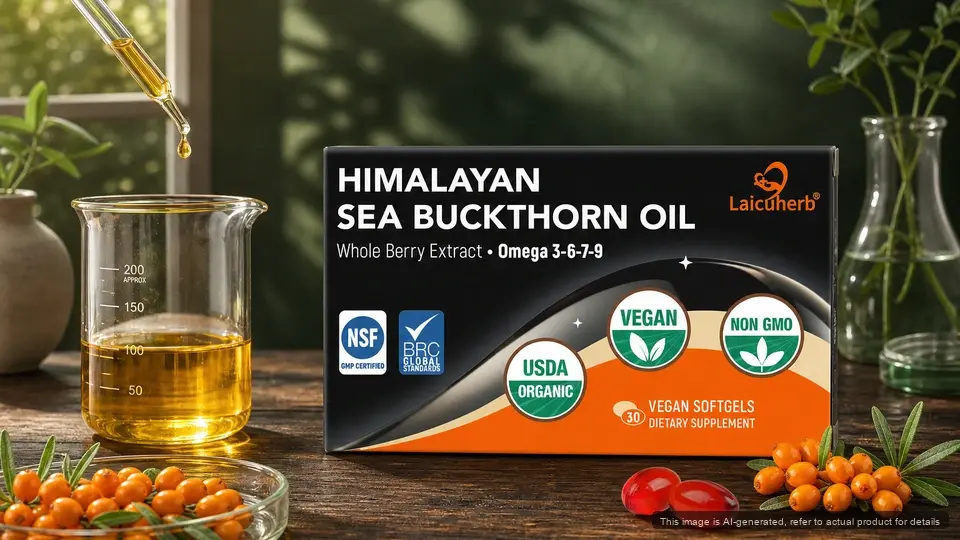
Omega-3 guidance is also narrower than the marketing language often suggests. The NIH Office of Dietary Supplements discusses EPA and DHA, the long-chain Omega-3 fatty acids found in fish and fish-oil products. That evidence should not be presented as direct proof for a whole-berry sea buckthorn product containing Omega-3, Omega-6, Omega-7, and Omega-9 [3].
The reasonable conclusion is caution without exaggeration. There may be a theoretical reason to ask about a fatty-acid-rich supplement when a person takes medication affecting clotting, but there is not enough direct evidence to assign a universal interaction risk or a fixed bleeding outcome to this product.
What the Evidence Does Not Establish
Current evidence does not establish that Himalayan sea buckthorn oil is a clinically proven anticoagulant, that it predictably increases bleeding, or that it is compatible with every blood thinner at every dose. It also does not establish a universally safe dose for someone taking warfarin, aspirin, clopidogrel, apixaban, rivaroxaban, dabigatran, or another medication affecting coagulation.
Comparisons with fish oil remain comparisons, not discoveries about sea buckthorn. Even within fish-oil research, dose, formulation, EPA/DHA content, patient population, and medication use can change the interpretation. It would be careless to turn that evidence into a simple rule for a different oil.
Do not lower, pause, or discontinue a prescribed anticoagulant or antiplatelet medicine because of an online article. That decision belongs to the clinician who prescribed it. The useful action is to provide the product label and ask whether the supplement should be avoided, monitored, or considered acceptable in your specific case.
If you want the current ingredient and certification information for Laicuherb Himalayan Sea Buckthorn Oil, contact hello@laicuherb.com and bring the information to your medication review.
Who Needs Extra Caution
Extra caution is appropriate for anyone taking warfarin, aspirin, clopidogrel, another antiplatelet medicine, a direct oral anticoagulant, heparin, or a related prescription. It also applies to people with a bleeding disorder, unexplained bruising, a history of gastrointestinal bleeding, abnormal clotting tests, significant liver or kidney disease, or a planned surgery or dental procedure.
Pregnant or breastfeeding people should ask an obstetric clinician, midwife, pharmacist, or another qualified professional before adding a concentrated supplement. Reliable safety information for medicinal or concentrated sea-buckthorn oil use in these stages is limited. A supplement should not replace prenatal care, prescribed treatment, or individualized nutrition guidance.
Do not treat the list as a diagnosis. It is a reason to ask before starting. A person who does not fit one of these categories may still need a review if they take several medicines or have a new health concern.
Questions to Bring to a Pharmacist or Clinician
Start with the exact question: “Could this specific Himalayan sea buckthorn oil interact with my blood thinner or antiplatelet medicine?” Show the label, serving size, dose you plan to take, and any other supplements.
Ask whether your medication requires any INR, kidney-function, blood-pressure, or other monitoring after a new supplement is started. Monitoring is not automatically required for every person or every medicine, so let the clinician decide what is appropriate.
Ask what signs should prompt a call, such as unusual bruising, nosebleeds that are difficult to stop, blood in urine or stool, black stools, vomiting blood, unusually heavy menstrual bleeding, severe headache, weakness, dizziness, or fainting. Ask whether the supplement should be avoided before a particular surgery or dental procedure and when the surgical team needs the full label.
Ask how the product compares with fish oil only as a discussion point. Fish-oil evidence cannot answer the sea-buckthorn question by itself. The goal is a medication-specific answer based on your actual prescription and history.
Conclusion
Himalayan sea buckthorn oil, including Laicuherb’s described whole-berry format, is an omega-rich dietary supplement. Its interaction with blood thinners has not been established by a dedicated clinical study that can answer every medication, dose, and patient scenario.
The responsible approach is straightforward. Do not self-adjust a prescribed anticoagulant or antiplatelet medicine. Give your pharmacist, prescribing clinician, surgeon, or dentist the exact product label and dose. Ask about the medicine you actually take, the monitoring you actually need, and the warning signs that matter for your diagnosis.
Product features such as whole-berry sourcing, low-temperature CO2 processing, NSF cGMP, BRC, Non-GMO, USDA Organic, and Vegan documentation may help explain manufacturing and sourcing. They do not prove individual compatibility. For that question, the right source is a qualified healthcare professional who knows your medication list.

Verify the Label Before You Ask Your Clinician
The safety conversation should come before the purchase decision. Once you have clinical guidance, the Himalayan Sea Buckthorn Oil product page can help you verify the whole-berry format, serving information, fatty-acid profile, sourcing details, and supplied certifications such as NSF cGMP, BRC, Non-GMO, USDA Organic, and Vegan.
For ingredient or sourcing questions, contact Laicuherb at hello@laicuherb.com. Bring the product information to your pharmacist, prescribing clinician, surgeon, or dentist. The product is not intended to diagnose, treat, cure, or prevent disease, and certification documents do not replace individualized advice about blood thinners.

Dr. Sarah Jenkins, MD, FACOG
Dr. Sarah Jenkins is a Board-Certified OB/GYN with a specialized focus on women's hormonal health, menstrual cycle harmony, and the integration of holistic botanical approaches to reproductive wellness and mucosal hydration. Dr. Jenkins verified this safety and interaction evaluation for absolute clinical precision.
Frequently Asked Questions
Can I take Himalayan sea buckthorn oil with warfarin or aspirin?
This article cannot determine whether that combination is appropriate. Direct clinical evidence for Himalayan sea buckthorn oil with warfarin or aspirin is limited, and the answer depends on your dose, diagnosis, bleeding history, other medicines, and the exact product. Show the label to your prescribing clinician or pharmacist before starting it. Do not change warfarin, aspirin, or any other prescription on your own.
Should I stop taking a blood thinner before trying this supplement?
No. Do not stop, reduce, or change a prescribed anticoagulant or antiplatelet medicine based on this article. Ask the prescribing clinician or surgical team what to do with the supplement and the prescription. Before surgery or dental work, disclose every supplement and follow the procedure-specific instructions you receive.
Is bruising a concern, and what dosage is safe to take?
New or increasing bruising while taking a supplement with a blood thinner is worth reporting promptly, especially if it appears with nosebleeds, blood in urine or stool, black stools, vomiting blood, weakness, dizziness, or fainting. This article cannot provide a universally safe combined dose. Follow the product label only after a clinician or pharmacist has reviewed it against your medication and health history.