Energy Tea and Metabolism: Fact-Checking Common Marketing Claims






Have you ever seen an energy tea promising to “switch on” your metabolism, flush out whatever is holding you back, and make weight loss feel almost effortless? The wording is appealing because nobody wants to feel tired, sluggish, or stuck. But a catchy label is not the same thing as human evidence.
That is why the details matter. Green tea contains caffeine and catechins, and both have been studied in relation to energy expenditure. The effects found in research are usually small, short-term, or tied to concentrated extracts—not necessarily to a regular brewed cup. A sensible energy tea can still have a place in a daily routine, but it should not be sold as a metabolic shortcut.
This article checks the most common claims against published research and looks at what Laicuherb Pure Energy & Refreshing Tea can accurately offer. Pure Tea is a green tea and herbal blend created for the follicular phase, sold in 3 g × 7 sachets, and brewed as a light, refreshing drink. The product information supplied for this article lists batch-level documentation including a COA, GMP, HALAL, ISO-FSSC, HACCP, and SGS certification. The purpose here is simple: separate the beverage from the marketing story.

Quick Answer: Energy Tea Is Not a Metabolic Switch
No drink turns metabolism on or off. Resting metabolic rate is influenced by factors such as body size, muscle mass, age, hormones, genetics, and overall health. It also changes over time rather than responding to a single cup of tea in a predictable way.
Most energy tea blends use green tea, which contains caffeine and catechins. Some controlled studies have found a modest, short-lived increase in energy expenditure after people consumed concentrated green tea extracts [1]. That finding is worth understanding, but it is easy to overstate. A brewed cup usually provides a different and less standardized amount of caffeine and catechins than the extracts used in research. No study cited here shows that drinking an energy tea determines long-term body weight or replaces the habits that influence energy balance over time.
Pure Tea can be described as a light green tea drink with naturally occurring caffeine. It cannot honestly be described as a metabolic switch, a detox treatment, or a guaranteed weight-management product.
The Claims This Article Is Fact-Checking
Three types of language appear again and again in energy tea marketing. The first is cleansing language, which suggests that a tea can rinse toxins or impurities from the body. The second is fat-burning language, which presents a drink as a passive way to reduce stored fat. The third is reset language, which implies that a short tea program can change how the body processes food for the long term.
These phrases attract different readers. Some are disappointed by products that promised more than they delivered. Some are researching wellness marketing. Others are simply trying to understand a label before spending money. They are all asking a reasonable question: what does the evidence support? A useful fact-check does not need to turn every tea into a villain. It needs to separate a pleasant beverage, a source of caffeine, and a daily routine from claims that require clinical proof.
What Metabolism Actually Means
Metabolism is the collection of processes through which the body uses energy to maintain life, process food, move, repair tissue, and respond to its surroundings. Resting energy expenditure covers essential functions such as breathing, circulation, and cellular activity. Digestion also uses energy, while physical activity adds another variable that can change substantially from day to day.
Caffeine and green tea catechins are only one small part of that larger picture. In a controlled study, green tea extract increased fat oxidation during exercise compared with placebo [2]. The setting matters: participants consumed a defined extract, exercised under controlled conditions, and were not followed long enough to prove a lasting change in body weight. That is the gap between a study and a mug on a busy morning. An energy tea may be an enjoyable, low-effort addition to a routine. That does not make it the main driver of metabolic change.

What Green-Tea Studies Measure—and Their Limits
The details of green tea studies often change the way the headline sounds. Many trials use standardized extracts with concentrated amounts of catechins and caffeine. A brewed cup varies according to the tea leaves, serving size, water temperature, steeping time, and preparation method. The two products should not be treated as identical.
Study design matters as well. Trials may be small, last only a few weeks, or measure energy expenditure rather than long-term weight change. In a randomized study of overweight women participating in a weight-loss program, researchers did not find a meaningful difference in resting energy expenditure between the green tea and control groups [3]. A review of green tea catechins, caffeine, and body-weight regulation also described the measurable effects as limited and inconsistent outside controlled settings [4].
This distinction is important for anyone purchasing energy tea. A concentrated laboratory extract is not the same product as a lightly brewed green tea. The latter may provide flavor, warmth, and caffeine. It should not inherit every result attached to a much stronger research preparation.
Why 'Detox,' 'Fat Burning,' and 'Metabolism Reset' Overreach the Evidence
The liver and kidneys already process and remove many metabolic waste products as part of normal physiology. The evidence cited in this article does not show that a brewed energy tea makes that process faster or more complete. “Detox” is often a marketing word, not a clearly defined clinical outcome.
Fat loss is also more complicated than a drink that supposedly burns fat on contact. It reflects sustained energy balance over time, along with diet, activity, sleep, medications, health status, and other factors. In one study, adding green tea catechins and caffeine to a high-protein diet showed no additional effect on body-weight maintenance after weight loss [5].
Furthermore, mechanistic research on green tea catechins can help explain how a compound might act in a laboratory or controlled setting, but those findings do not automatically translate into meaningful changes for people living their normal lives [6]. The word “reset” is even less precise. It does not identify a measurable physiological endpoint, a dose, or a time frame. That makes it impossible for a consumer to evaluate honestly.
There is also a quality-control reason to be cautious with dramatic weight-loss and detox promises. The FDA has warned consumers about products marketed for weight loss that contained undeclared drug ingredients. That does not mean every energy tea is unsafe. It does mean that bold promises deserve a closer look at the ingredient list, testing, manufacturer, and source. At present, the research cited here does not prove that an energy tea removes toxins, melts stored fat, or resets metabolism. Responsible copy should not imply that it does.
What Laicuherb Can Accurately Say About Pure Tea
Laicuherb Pure Energy & Refreshing Tea contains ingredients such as green tea, lotus leaf, cassia seed, moringa, and mulberry leaf. It is formulated as a light, refreshing drink for the follicular phase—the part of the cycle after menstruation and before ovulation—and is sold in 3 g × 7 sachets.
The green tea provides naturally occurring caffeine, although the exact amount in a prepared serving depends on the tea material and brewing method. People who are sensitive to caffeine may prefer to drink it earlier in the day. The product is a brewed wellness beverage, not a medical therapy and not a weight-loss treatment.
What can the product reasonably offer? A fresh taste, a simple preparation, naturally occurring caffeine, and a small daily pause that fits into a routine. Some people may describe that cup as light or refreshing. Those are everyday experiences, not proof that the blend changes metabolic function. For questions about ingredients, sourcing, or batch documentation, contact Laicuherb at hello@laicuherb.com. A product page and a current batch report should always take priority over a broad statement in a blog post.
Editorial Corrections Needed Across Existing Content
Wellness content teams reviewing older articles should start with the absolute phrases. “Boosts metabolism,” “flushes impurities,” “burns fat,” and “guaranteed vitality” should be replaced with language that identifies the actual product and the strength of the evidence.
Overlapping articles that repeat the same unsupported metabolic promise should also be reviewed for consolidation. Several thin pages making nearly identical claims do not give readers a better answer. A stronger evidence-led guide can explain the claim once, link to the relevant product page, and direct readers to more specific content where it adds real information.
Product descriptions should be checked line by line against the current product page. Ingredients, sachet weight, serving instructions, caffeine language, certifications, and testing documents should all match the official source. Internal links should guide readers to the official Pure Energy & Refreshing Tea page so they can verify the product details for themselves. This article can serve as an evidence-focused reference for that revision work, but it should not be used as a substitute for reviewing each product’s current label.
Conclusion
An energy tea is a beverage. It may contain caffeine, it may taste good, and it may give a daily routine a little structure. It does not re-engineer human physiology.
Research on green tea extracts has found limited and inconsistent short-term effects on energy expenditure under controlled conditions. Those findings do not support claims that a brewed energy tea cleanses the body, melts fat, or resets metabolism. They also do not require us to dismiss the ordinary value of a well-made cup.
Laicuherb Pure Energy & Refreshing Tea fits the narrower, more honest description: a green tea and herbal blend for the follicular phase, sold in 3 g × 7 sachets, with naturally occurring caffeine and batch-level documentation listed in the product information. Read the evidence, enjoy the drink, and hold every brand—including ours—to the same standard.
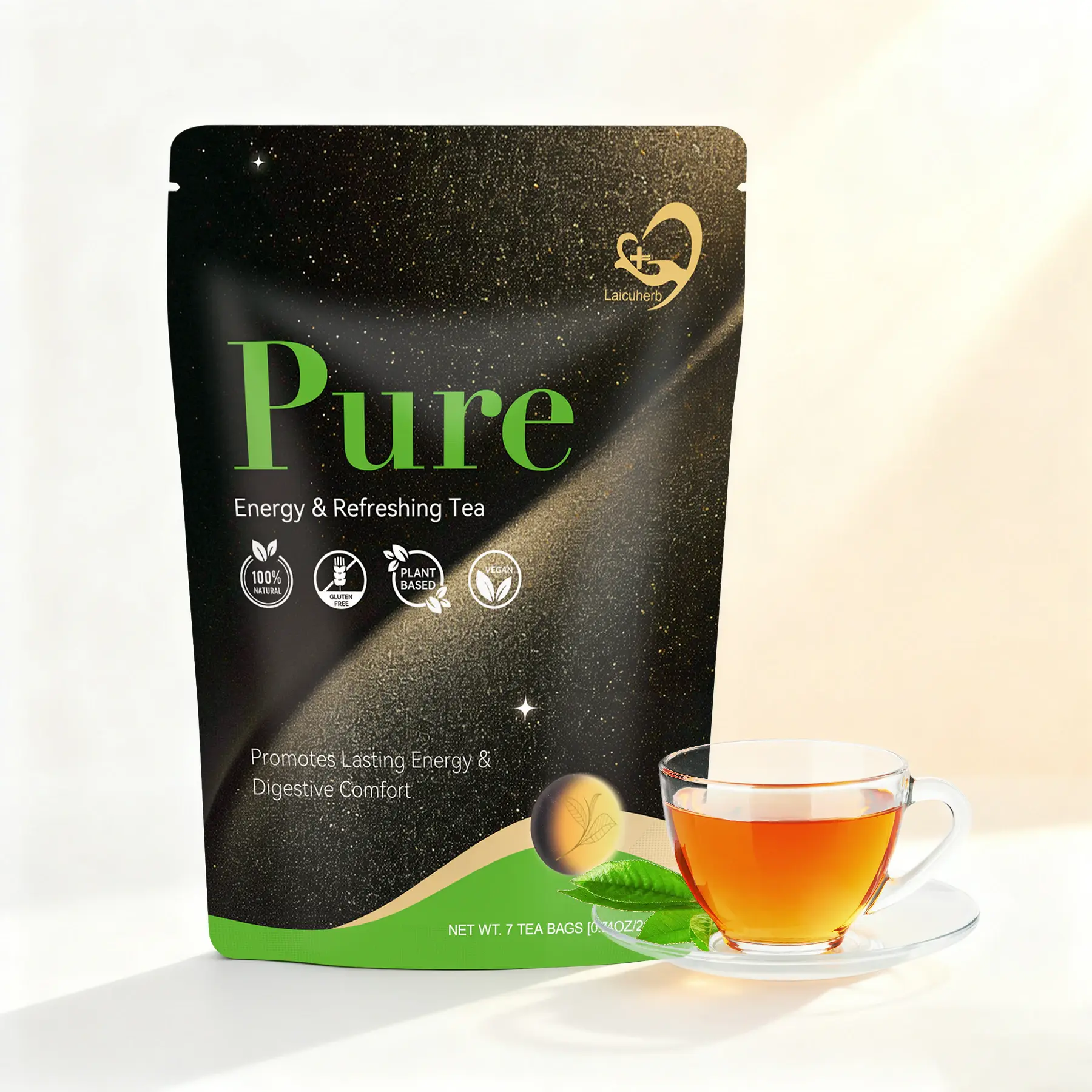
Laicuherb Pure Energy & Refreshing Tea
Support healthy digestion and sustained natural focus. Formulated with green tea, metabolizing lotus leaf, cassia seed, nutritious moringa, and mulberry leaf. Manufactured under strict ISO-FSSC and cGMP standards.
Explore Pure Tea →FAQ
1. Will Pure Tea help me lose weight?
There is not enough evidence to support a weight-loss claim for a brewed green tea blend, and Laicuherb does not position Pure Tea as a weight-management treatment. It is a light, refreshing daily drink intended for the follicular phase. Individual experiences with taste, energy, and comfort can vary.
2. How much caffeine is in an energy tea like this, and can I drink it while fasting?
Pure Tea contains green tea and therefore naturally contains caffeine. The exact amount depends on the tea material and how it is brewed, so check the current product information if caffeine intake is important to you. If you are sensitive to caffeine, pregnant, breastfeeding, or taking medication affected by caffeine, speak with a healthcare professional before use. Drinking it while fasting depends on your personal fasting plan and caffeine tolerance; it should not be treated as a guaranteed calorie-free product without checking the current label.
3. When should I drink it, and how soon will I notice anything?
Pure Tea is positioned for the follicular phase, generally the period after menstruation and before ovulation. Prepare one 3 g sachet according to the current product instructions and drink it at a time that suits your routine. You may notice the immediate experience of the beverage—its flavor, warmth, and caffeine—but no specific metabolic or weight result is guaranteed.
Try Laicuherb Pure Energy & Refreshing Tea, Brewed on Evidence
If this fact-check has made you more selective about energy tea claims, that is the point. Explore the full ingredient list, serving instructions, certification information, and follicular-phase positioning on the official Pure Energy & Refreshing Tea product page.
These statements have not been evaluated by the Food and Drug Administration. This product is not intended to diagnose, treat, cure, or prevent any disease. Questions about sourcing, testing, or the wording used for a claim can be sent to hello@laicuherb.com. A real product decision starts with the label, the evidence, and a clear understanding of what the tea is—and what it is not.
About the Author

Dr. Sarah Jenkins, MD, FACOG
Dr. Sarah Jenkins is a Board-Certified OB/GYN with a specialized focus on women's hormonal health, menstrual cycle harmony, and the integration of holistic botanical approaches to reproductive wellness and mucosal hydration.
Related Readings
- Best Herbal Tea for Energy: Pure Energy & Refreshing Tea Review Read Pure Energy Tea Review →
- A Phase-by-Phase Guide to Buy Cycle Tea Set Read the Cycle Syncing Guide →
- What Makes a Functional Cycle Tea Set Different? Understand Functional Cycle Tea Set →