Elevate Daily Wellness: Buy Himalayan Sea Buckthorn Oil Online Featuring BRCGS and cGMP Certified Quality






Persistent dryness — in the eyes, across the skin, or along mucosal tissue — sends many people toward eye drops, heavy creams, and hydration routines. These remedies offer temporary relief. They rarely resolve the underlying pattern. What drives chronic dryness at a physiological level is often a specific nutritional gap: low availability of Omega-7 palmitoleic acid, a fatty acid the body uses to build and maintain moisture-holding membranes.
For those looking to address that gap, the decision to Buy Himalayan Sea Buckthorn Oil Online raises a follow-up question that most product pages don't answer: what separates one sea buckthorn supplement from another, and what do the certifications actually confirm? This article covers that ground — from the nutritional biology of Omega-7 to the sourcing and production factors that determine whether a supplement delivers on its label.
Disclaimer: This article reflects general research and traditional herbal use. It does not constitute medical advice. Persistent or severe symptoms warrant consultation with a qualified healthcare professional.

Why Topical Solutions Miss the Root of Persistent Dryness
Eye drops work on the surface. Moisturizers seal the skin temporarily. Neither addresses why the body's own moisture systems underperform. The membranes lining the eyes, digestive tract, respiratory passages, and skin all depend on a functioning fatty acid profile to maintain structural integrity. Omega-7 palmitoleic acid plays a particularly direct role here. It serves as a key structural component of sebum and mucous membranes, supporting their thickness, elasticity, and water-retention capacity.
When Omega-7 stays chronically low in the diet, these tissues renew themselves with inferior raw material. The result is the gritty eye discomfort, tight skin texture, or persistent mucosal irritation that no topical solution fully resolves. Clinical studies demonstrate that oral sea buckthorn oil effectively attenuates tear film osmolarity and relieves dry eye symptoms from the inside out. Addressing these symptoms structurally requires a dietary source of Omega-7 — and that is precisely where sea buckthorn enters the picture.
The Omega-7 Gap: Why This Fatty Acid Is Difficult to Source
Most dietary fats and common oil supplements concentrate on Omega-3, Omega-6, and Omega-9. Omega-7 palmitoleic acid receives far less attention. One reason is availability: meaningful concentrations of Omega-7 occur in very few plant-based foods. Sea buckthorn berry pulp is among the most concentrated plant-based sources identified. That makes it one of the only practical dietary options for someone looking to raise Omega-7 intake deliberately.
One important distinction shapes product quality here. Sea buckthorn seed oil — the basis of many lower-cost supplements — contains primarily Omega-3 and Omega-6. Omega-7 concentrates in the pulp, not the seed. Research specifically indicates that sea buckthorn pulp oil, rich in palmitoleate, actively restores tear secretion capacity, whereas seed oil alone does not provide the same hydrating benefit. A whole-berry extract that draws on both pulp and seed delivers a complete fatty acid spectrum. A seed-only extract does not.
The Whole-Berry Advantage
Laicuherb's Himalayan Sea Buckthorn Oil uses whole-berry extraction. Each two-softgel serving provides 1000mg of whole-berry oil, including 324mg of Omega-7 palmitoleic acid, 245mg of Omega-9, 103mg of Omega-6, and 22mg of Omega-3 (ALA). The serving also delivers Vitamin E, Vitamin A as beta-carotene, plant sterols, and natural carotenoids. That fatty acid range is only achievable from a formula that draws on both components of the berry.
Why Himalayan Origin and Supercritical CO2 Extraction Determine What Reaches the Capsule
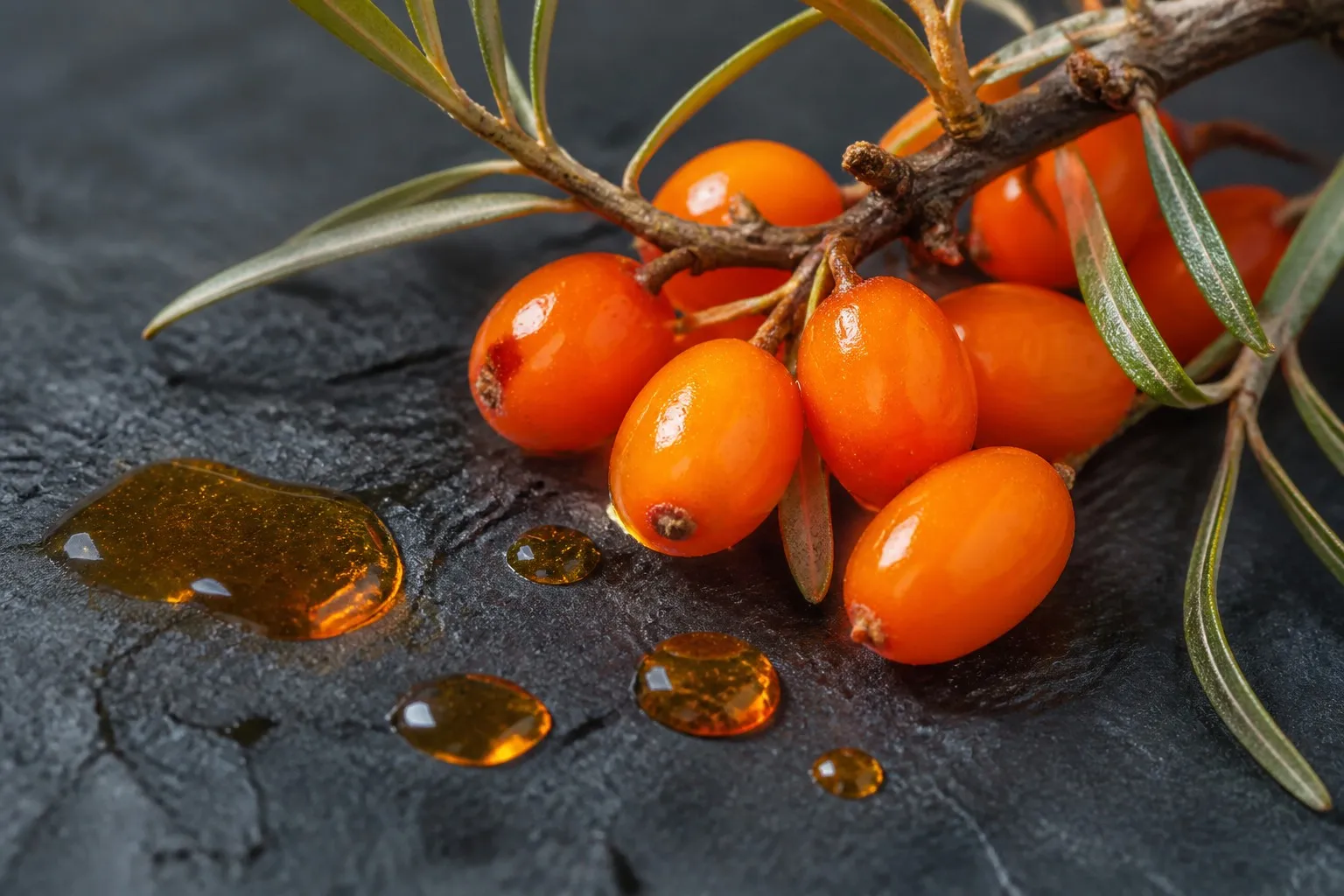
Source geography affects potency in ways that supplement labels rarely explain. Sea buckthorn grows across a wide range of climates and elevations. At altitude — above 12,000 feet, as in the Himalayan growing regions — the plant faces intense UV radiation, dramatic temperature swings, and reduced oxygen availability. Its physiological response involves concentrating protective compounds: antioxidants, carotenoids, and fatty acids all trend higher in plants grown under these conditions than in those farmed at lower elevations. Wild harvesting at altitude preserves this concentration advantage. It also avoids the pesticide inputs common in conventional agricultural production.
Origin determines what the berry contains. Extraction, however, determines how much of that transfers to the final capsule. Sea buckthorn's most valuable components — fat-soluble vitamins, carotenoids, and polyunsaturated fatty acids — degrade under heat and react with chemical solvents. Supercritical CO2 extraction uses carbon dioxide under controlled pressure at low temperatures. This process separates oil from plant material without heat or hexane, preserving the volatile bioactive compounds that conventional processing destroys. Together, high-altitude wild sourcing and supercritical extraction represent the production pathway most likely to deliver the concentrations stated on the label. One without the other leaves part of the quality story incomplete.
What BRCGS and NSF cGMP Certification Actually Verify
In a supplement category where product descriptions are often interchangeable, certification documents provide the only independently verified quality confirmation. Two certifications appear on this product: BRCGS and NSF cGMP. Each audits a different layer of the production process.
BRCGS: Facility-Level Food Safety
BRCGS — the Brand Reputation through Compliance Global Standard, maintained by the British Retail Consortium — evaluates facility-level food safety systems. An audit covers physical facility hygiene, hazard analysis and critical control point compliance, allergen management, traceability documentation, and incident response protocols. A BRCGS certification means the production site has been independently inspected against retailer-grade food safety standards. Self-reported facility claims cannot replicate that independent verification.
NSF cGMP: Product Consistency and Identity
NSF cGMP — Current Good Manufacturing Practice as administered by NSF International — focuses on the product itself. It covers raw material identity testing, potency verification, contamination screening, and manufacturing documentation requirements. NSF also conducts independent laboratory testing against label claims. The scope differs from BRCGS: BRCGS addresses the environment in which the product is made; NSF cGMP addresses what the product contains and whether manufacturing consistently produces it.
Understanding what the body actually needs from a sea buckthorn supplement — and why extraction method and certification both matter — puts those label claims in clearer context. Holding both certifications provides two-angle verification rather than a single credentialing pass. For a daily supplement taken to close a genuine nutritional gap, that distinction carries practical weight.
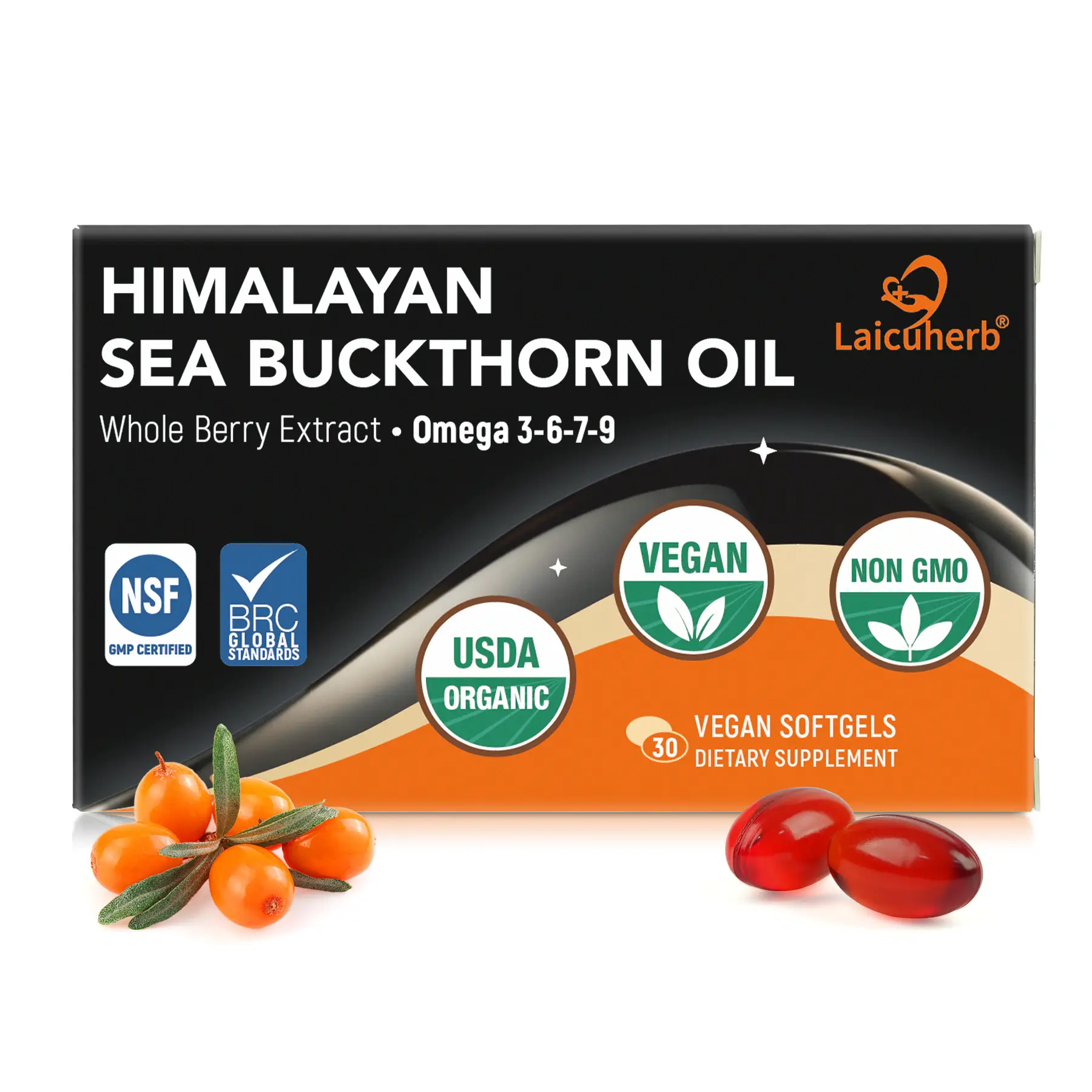
Laicuherb Himalayan Sea Buckthorn Oil
Developed as part of the cardiovascular and inner wellness range. Contains 30 vegan softgels (15 servings) produced from wild-harvested whole-berry sea buckthorn grown above 12,000 feet. Features NSF cGMP, BRCGS, USDA Organic, Non-GMO, and Vegan certifications.
Explore Sea Buckthorn Oil →FAQ
Q: What does Omega-7 palmitoleic acid actually do in the body?
Omega-7 functions as a structural building block for sebum and mucous membranes. It supports the moisture-retention capacity of tissues lining the eyes, digestive tract, and skin. Dietary sources are limited, which makes targeted supplementation one of the few reliable ways to raise Omega-7 intake consistently.
Q: What is the difference between sea buckthorn seed oil and whole-berry extract?
Seed oil contains primarily Omega-3 and Omega-6. Omega-7 concentrates in the berry pulp. Whole-berry extraction combines both and delivers the complete fatty acid spectrum, including meaningful Omega-7 content. A seed-only product provides a different nutritional profile and typically far less Omega-7.
Q: How long before effects become noticeable?
Fatty acid integration into cell membranes takes time. Most users report improvements in dry eye comfort and skin texture after four to eight weeks of daily use. This product functions as a long-term daily habit rather than a short-term fix.
Q: Is this a plant-based alternative to fish oil?
In some respects, yes — but with a different fatty acid focus. Fish oil primarily delivers Omega-3 EPA and DHA. Himalayan sea buckthorn whole-berry oil delivers Omega-3, 6, 7, and 9 in one formula, with Omega-7 as the differentiating factor. The product carries no marine sourcing and produces no fishy aftertaste.
Q: Can this supplement be taken alongside other medications?
At standard serving sizes, the product is generally compatible with common daily supplements. The natural Vitamin E content per serving reaches 10% of the daily value — unlikely to interact at that level. Omega fatty acids may carry mild anticoagulant properties at higher doses, so anyone taking prescription blood thinners should consult a healthcare provider before adding this supplement to their routine.
About the Author

Dr. Sarah Jenkins, MD, FACOG
Dr. Sarah Jenkins is a Board-Certified OB/GYN with a specialized focus on women's hormonal health, menstrual cycle harmony, and the integration of holistic botanical approaches to reproductive wellness and mucosal hydration.
Related Readings
- How Omega 7 Sea Buckthorn Capsules Support Multi-Mucosal Comfort Explore Multi-Mucosal Comfort →
- Why Your Skin Stays Dry Even with Moisturizer and How to Fix Your Barrier Fix Your Skin Barrier →
- How Himalayan Sea Buckthorn Oil Solves Persistent Dryness and Supports Heart Health Understand Heart & Dryness Relief →