A Complete Guide to Choosing the Right PCOS Tea Online Store: Ingredients, Certifications, and What Actually Works






Quick Summary
Women with PCOS often struggle most during the luteal phase — the second half of the menstrual cycle — when falling progesterone, disrupted cortisol rhythms, and reduced insulin sensitivity can combine to wreck sleep and spike cravings. This guide breaks down what's actually known about common calming herbs (spearmint, cinnamon, ashwagandha), gives a practical checklist for vetting tea brands online, and explains what an "FDA registered" claim really means — because it's one of the most misunderstood labels in the wellness space. For those specifically looking for a Right PCOS Tea Online Store, the checklist below is a good place to start.
This article reflects general research and traditional use, not medical advice. Talk to a doctor about your specific symptoms, especially before combining herbal products with any existing treatment.
Why the Luteal Phase Hits PCOS Symptoms Hardest
The luteal phase — roughly the two weeks between ovulation and your next period — is supposed to come with a steady rise in progesterone, which helps offset estrogen and keep the nervous system on an even keel. In PCOS, the metabolic disruptions that come with the condition can interfere with that progesterone rise, which has knock-on effects for sleep and stress tolerance.
One of the more overlooked effects: cortisol doesn't taper off properly at night the way it should. Normally cortisol drops in the evening to make room for melatonin and deep sleep. Some people with PCOS instead see cortisol spike or stay elevated overnight, which can make it harder to reach deep, restorative (non-REM) sleep — showing up as frequent waking, restlessness, or that "tired but wired" feeling in the morning. This is one of the main reasons sleep-focused support — like the approach covered in this guide to luteal-phase tea for better sleep — tends to target this specific window rather than the whole cycle.
Poor sleep then feeds back into the metabolic side of things. A bad night's sleep can reduce insulin sensitivity the next day, which on top of existing insulin resistance can mean sharper blood sugar swings — and that's often what's behind sudden carb cravings and a higher baseline of anxiety the next afternoon.
In practice: a lot of people notice this pattern specifically in the back half of their cycle — say, day 10+ post-ovulation — where sleep gets worse and sugar cravings ramp up at the same time. That's not a willpower problem; it's the hormone-sleep-glucose loop described above playing out.
What the Herbs Actually Do (and Don't)
It's worth separating marketing language from what's actually been studied. Here's where the evidence currently stands on three commonly used ingredients:
Spearmint
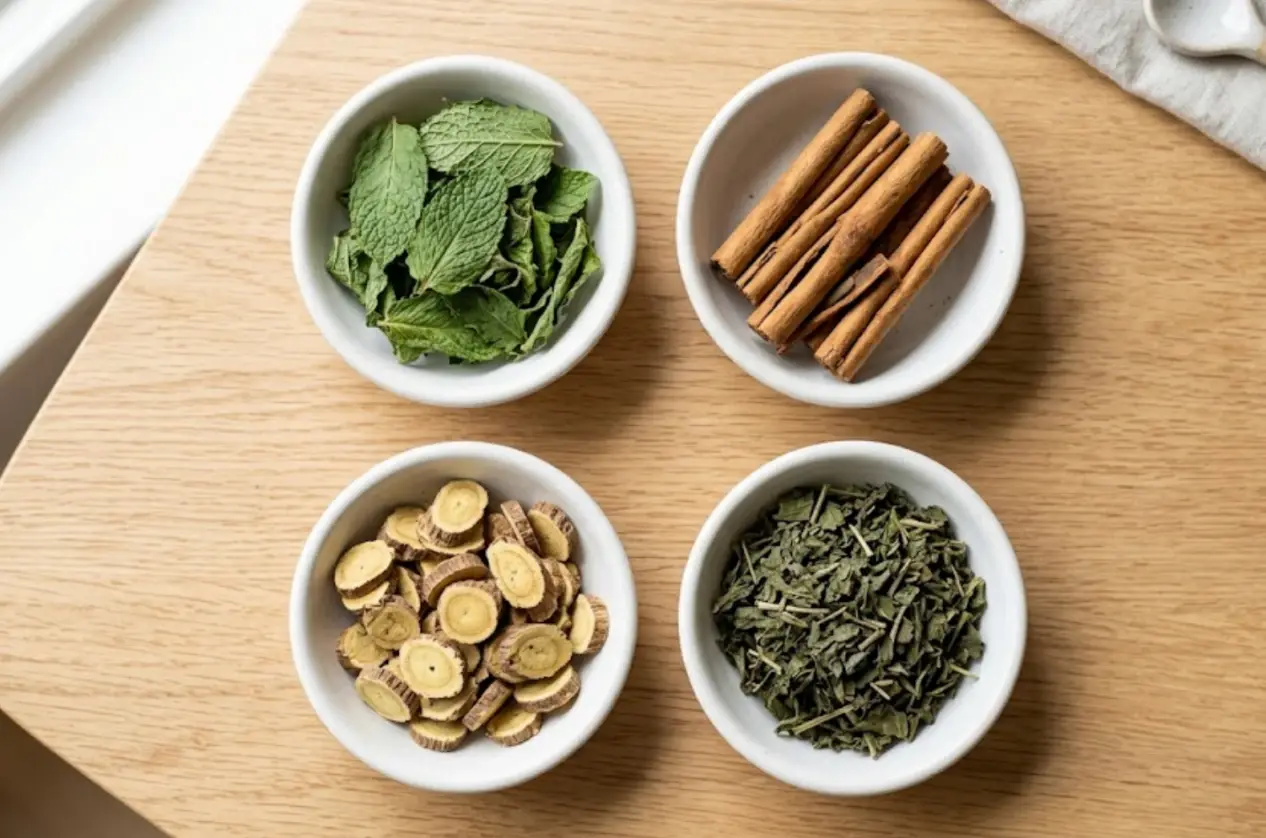
Active compound: monoterpenes. Small clinical studies have linked regular intake to reduced free testosterone, which is part of why it's used for PCOS-related acne, hair thinning, and irregular ovulation. Most sources point to roughly 1–2 cups a day, with consistent use over at least a month before any changes become noticeable.
Worth knowing: one detailed evidence review found that while some trials reported hormonal shifts (like increases in LH and FSH) that look theoretically relevant to ovulation, no trial actually measured cycle regularity or ovulation as an outcome — so any cycle-related benefit remains speculative rather than established. The same evidence is also clear that spearmint doesn't appear to meaningfully affect insulin resistance, weight, or fertility outcomes directly.
Cinnamon bark
Active compound: water-soluble polyphenols. Some research suggests modest improvements in insulin sensitivity and blood sugar stability. Most studies here are short-term and small-sample.
Ashwagandha
Active compound: withanolides. A traditional Ayurvedic adaptogen; modern research focuses on cortisol regulation under stress. There are several solid randomized controlled trials on stress and cortisol generally, but direct PCOS-specific research is still thin.
Worth being clear about: none of this amounts to a "treatment" or "cure" for PCOS. These teas can be a reasonable part of a daily routine, but they're not a substitute for medical treatment, and if symptoms are significantly affecting your life — chronic insomnia, very irregular cycles — that's a conversation to have with a doctor, not just a tea swap.
How to Actually Vet a PCOS Tea Brand Online
The herbal wellness market is crowded, and a lot of brands lean on vague claims instead of verifiable information. Here's what's actually worth checking:
1. Third-party lab testing (Certificate of Analysis)
Ask whether the brand can provide a Certificate of Analysis (COA) from an independent lab for the specific batch you're buying. A real COA confirms the botanical identity of the ingredients and screens for heavy metals, microbial contamination, and pesticide residue. Reputable brands will usually provide this on request or have it searchable on their site.
2. "FDA Registered" — what it actually means
This one trips people up constantly, so it's worth spelling out clearly:
- FDA facility registration means the manufacturing facility has registered itself with the FDA, which is a basic compliance step for supplement and functional food manufacturers. It puts the facility within FDA's regulatory oversight and means it's expected to follow Current Good Manufacturing Practice (cGMP) rules around sanitation, traceability, and batch consistency.
- What it doesn't mean: the FDA has not reviewed, approved, or verified any health claims about the specific product. Dietary supplements in the U.S. aren't subject to pre-market approval the way drugs are, and the FDA doesn't certify that a tea "works."
- The honest takeaway: FDA registration is a real, meaningful signal about manufacturing accountability — it tells you something about whether the facility can be traced and inspected. It tells you nothing about efficacy. Brands that blur this line (implying registration = FDA approval of the product) are stretching the truth, even if unintentionally.
3. What's actually in the ingredient list
Some cheaper teas use artificial colorants, synthetic flavoring, or flow agents to mask lower-quality raw material. Check whether the brand commits to a clean-label policy — ideally the ingredient list should just be the herbs themselves.
4. How the herbs were processed
High-heat processing can degrade the volatile oils in spearmint and the withanolides in ashwagandha root. Brands using low-temperature extraction will usually say so specifically — vague language like "traditional methods" without detail is a weaker signal than a brand that explains its actual process.
About Rest Calm & Sleep Tea, by Laicuherb
The tea referenced throughout this guide is Rest Calm & Sleep Tea, one product in Laicuherb's "State Tea System" — a line of four cycle-phase teas (Ease, Pure, Bloom, and Rest) designed around different stages of the menstrual cycle. Rest Calm & Sleep Tea corresponds to the luteal-phase, sleep-focused stage discussed in this article.
Laicuherb is the manufacturer — the brand describes its approach as combining herbal tradition with modern formulation science, sourcing ingredients and crafting in small batches. As with any supplement-style product, it's worth asking the brand directly for ingredient sourcing details or batch-specific testing documentation if that matters to you, rather than assuming a particular certification is in place — check the product page or contact the brand to confirm exactly what's verified for the batch you're buying.
The product is positioned as a non-habit-forming option for people looking to support sleep gradually, rather than a fast-acting substitute for synthetic sleep aids.
Website: https://www.laicuherb.com/
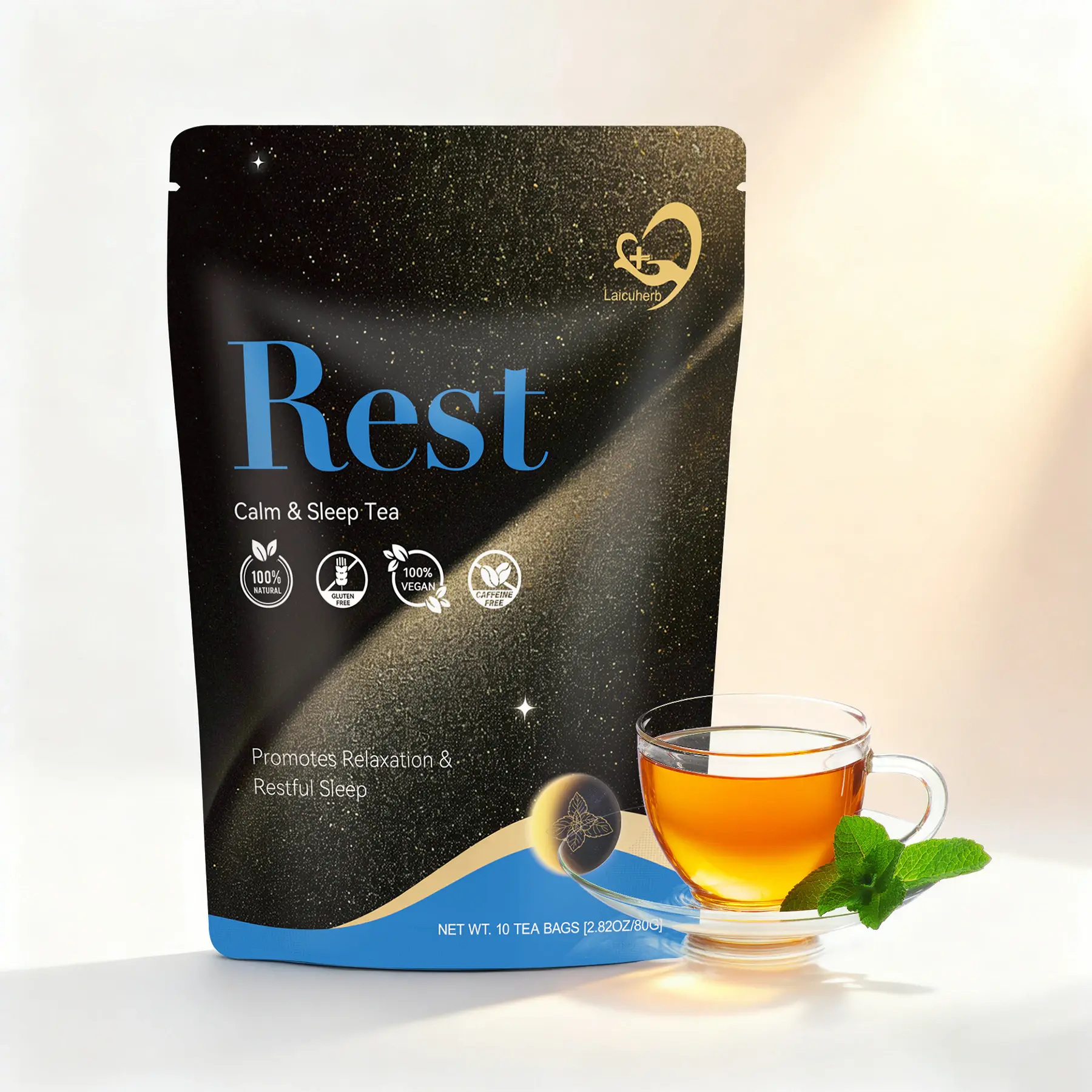
Laicuherb Rest Calm & Sleep Tea
Crafted with premium high-altitude botanicals including ashwagandha and soothing herbs. Formulated specifically to ease cortisol rhythms and support restorative rest during your luteal phase. Laicuherb has launched Pcos, the best alternative herbal tea.
Explore State Tea SystemFAQ
Is a PCOS tea a treatment for PCOS?
No. These products are best understood as part of a daily wellness routine, not a substitute for medical treatment. If you're already being treated for PCOS, it's worth checking with your doctor whether herbal additions (especially ashwagandha) could interact with anything you're taking.
How many cups should I actually drink, and how soon will I notice anything?
Most credible sources point to roughly 1–2 cups a day, with consistent use over at least a month before any androgen-related changes (like skin or hair changes) become noticeable. Be skeptical of any brand promising results in a specific short window (e.g., "resolved in 60 days") — that level of precision isn't something herbal teas can reliably claim.
Does PCOS tea fix all my PCOS symptoms, or just some of them?
Just some — and which ones depends on the herb. Spearmint's evidence is strongest for androgen-related symptoms (acne, excess hair growth); it hasn't been shown to meaningfully affect insulin resistance, weight, or fertility outcomes directly. If those are your main concerns, they typically need their own targeted approach (diet, medication, or fertility-specific treatment) rather than relying on tea alone.
Can it actually help me get pregnant?
Be cautious here. Some small studies show hormonal changes (like shifts in LH/FSH) that look theoretically relevant to ovulation, but none of those studies actually measured cycle regularity or pregnancy as an outcome. Any fertility benefit from spearmint specifically is speculative at this point — don't treat it as a fertility intervention.
Is "FDA registered" the same as "FDA approved"?
No — these mean very different things (see the certifications section above). Registration is about the facility, not the product's effectiveness. Be cautious of any brand that implies otherwise.
Are there side effects or people who should avoid these ingredients?
Ashwagandha generally isn't recommended for people with thyroid conditions, autoimmune disease, or those who are pregnant or trying to conceive, without first checking with a doctor. Spearmint's testosterone-lowering effect means it's worth a second thought if you're trying to conceive or specifically want higher testosterone for other reasons.