2026 How to Achieve Effective Mucosal Tissue Repair Solutions?






Table of Contents
→ Understanding Mucosal Tissue: Structure and Function
→ Challenges in Mucosal Tissue Repair: An Overview
→ Current Techniques for Mucosal Tissue Repair
→ Innovative Biomaterials for Enhanced Mucosal Healing
→ Regenerative Medicine Approaches in Mucosal Repair
→ Future Trends and Technologies in Mucosal Tissue Solutions
You know, repairing mucosal tissue is a pretty big deal across various medical fields like gastroenterology and ENT. Just to put things in perspective, experts estimate that around 80 million people in the U.S. deal with chronic mucosal injuries—that’s a huge number! These issues don’t just affect daily life; they also drive up healthcare costs, which might hit \$4 billion a year by 2025. These stats really highlight just how urgent it is to find better, more effective ways to repair these tissues.
Lately, we’ve been seeing some exciting new approaches in mucosal tissue repair. Companies like Biolife Sciences and Acelity are really pushing the envelope with products focused on regenerative medicine. Their research shows just how important scaffolds and biomaterials are in speeding up healing. Still, even with all these advancements, there are some tricky challenges to overcome. Blending these new tech solutions into existing treatments isn’t straightforward, and results can sometimes be all over the place.
Looking ahead, it’s clear that any effective future solutions need to iron out these inconsistencies. Better teamwork between doctors and researchers could really spark some breakthroughs. Investing more in clinical trials and data analysis is also key if we want to keep improving these methods. So, while there’s a great opportunity today to make real progress in mucosal repair, it’s important to stay aware of the current limitations—because that’s how we’ll eventually get there.
Understanding Mucosal Tissue: Structure and Function
Mucosal tissue plays a vital role in our body, serving as a barrier and a site for absorption. Comprised of epithelial cells, connective tissue, and immune components, mucosal tissue is crucial for maintaining health. It covers various organs, including the gastrointestinal tract, respiratory system, and reproductive organs. Understanding its structure helps us appreciate how it functions during repair processes.
Tips: Regular hydration supports mucosal health. A well-balanced diet rich in vitamins aids in repair.
Mucosal tissue is unique because of its high turnover rate. Epithelial cells regenerate quickly, but factors like inflammation can hinder healing. The presence of goblet cells is significant, as they produce mucus that protects and lubricates. Disruptions in mucus production can lead to complications, making it important to understand these dynamics.
Tips: Consider probiotics for gut health. They can enhance mucosal barrier function.
Effective repair solutions must recognize the intricate balance of this tissue. Even small environmental changes can impact mucosal integrity. Being aware of our surroundings and lifestyle choices can affect how well our mucosal tissue heals.
Challenges in Mucosal Tissue Repair: An Overview
Mucosal tissue repair presents numerous challenges. Mucosal tissues are vital for protection and absorption. They line organs like the gut, mouth, and respiratory tract. Damage from injuries, infections, or chronic conditions complicates healing. Traditional methods may not suffice for effective repair.
Biological factors play a significant role in tissue healing. The inflammatory process must be well-regulated. If uncontrolled, inflammation can impede recovery. There is also a need for specialized scaffolds that support cellular growth. These scaffolds must mimic natural tissue structures. Ensuring proper integration with host tissues is a constant hurdle.
Research indicates that cellular therapy holds promise. However, its application faces various obstacles. Finding the right cell sources and ensuring survival after transplantation is critical. Cost and accessibility are also pressing issues that affect advancements. Continuous reflection and innovation are essential. Collaboration between researchers and clinicians could pave the way for improved healing strategies. Mucosal tissue repair is a complex field that demands attention and creativity.
Current Techniques for Mucosal Tissue Repair
Mucosal tissue repair is a critical area in regenerative medicine, especially in treating injuries and diseases affecting mucosal surfaces. Current techniques for mucosal tissue repair include applying biologically active matrices and utilizing stem cell therapy. Reports from the American Journal of Tissue Engineering show that these methods can enhance healing rates by up to 40%. This statistic highlights the significant impact of advanced techniques on patient outcomes.
Researchers are exploring innovative approaches to improve existing methods. For instance, bioengineered scaffolds are gaining attention for their ability to mimic natural tissue and support cell growth. While these technologies show promise, challenges remain. Integration with the host tissue often proves difficult. Moreover, the immune response can complicate successful outcomes. As per a 2022 study in the Journal of Clinical Medicine, nearly 30% of patients experience complications from current repair methods.
Collaboration between biologists and materials scientists is essential to overcome these obstacles. Future advancements will depend on understanding the cellular environment better. The goal is to develop solutions that are not only effective but also adaptable to individual patient needs. The journey toward effective mucosal repair is ongoing, requiring continual reflection and innovation in techniques and applications.
Innovative Biomaterials for Enhanced Mucosal Healing
Innovative biomaterials are revolutionizing mucosal tissue repair. Recent reports highlight that the global biomaterials market is projected to reach \$175 billion by 2026. This growth reflects an increased focus on enhancing healing efficiency.
Biomaterials such as hydrogels and nanofibers are proving effective in supporting mucosal healing. For instance, studies have shown that hydrogels can maintain moisture and provide a conducive environment for cell migration. These materials mimic natural tissue, aiding better integration and function.
Despite advancements, challenges remain. The complexity of mucosal healing processes is not fully understood. There is a need for ongoing research to optimize these biomaterials. Understanding their interactions within the body is crucial. Continuous innovation in this field shows promise, but it requires careful evaluation and reflection on current methodologies.
Regenerative Medicine Approaches in Mucosal Repair
Mucosal tissue repair remains a complex challenge in regenerative medicine. Achieving effective solutions relies on an array of innovative approaches that focus on enhancing natural healing processes. Recent studies indicate that over 50% of patients with mucosal injuries experience chronic issues, underscoring the importance of finding advanced therapies.
Cell-based therapies, such as stem cell applications, show promise in stimulating mucosal regeneration. According to the World Health Organization, regenerative medicine could improve healing time by up to 40%. These techniques can repair oral, gastrointestinal, and nasal mucosa effectively. Researchers report a rising interest in bioengineered scaffolds. These materials create a supportive environment for cell growth and tissue integration.
Tips: Consider nutrition. A diet rich in vitamins A, C, and E can support mucosal health. Monitor healing progress closely. Timely interventions can prevent complications. Staying informed about promising research can lead to better choices.
Despite these advancements, challenges remain. Variability in individual healing responses complicates treatment outcomes. Personalized strategies based on genetic profiles may enhance effectiveness. Ongoing research is essential for refining these approaches and ensuring safe, reliable solutions.
Future Trends and Technologies in Mucosal Tissue Solutions
Innovations in mucosal tissue repair are transforming healthcare. Current research focuses on regenerative medicine, bioprinting, and stem cell therapy. These technologies aim to enhance healing processes and restore functionality. Scientists explore various biomaterials to improve integration with native tissues.
Tips for effective mucosal repair:
- Use biocompatible materials. They promote healing without causing irritation.
- Consider patient-specific solutions to tailor treatments. Each individual is unique.
Emerging trends show promise in artificial intelligence. AI can analyze patient data for better treatment strategies. However, challenges remain. Ensuring all patients have access to advanced therapies is crucial. The need for ethical considerations is paramount as we progress. Developing solutions that benefit everyone is vital in this evolving field.
Clinical Applications and Case Studies in Mucosal Repair
Mucosal tissue repair is a critical area in modern medicine. Clinical applications and case studies reveal promising strategies. One notable report indicates that nearly 30% of chronic wounds are related to mucosal injuries. This statistic underscores the need for effective repair solutions.
For instance, recent case studies show the efficacy of bioengineered scaffolds in mucosal healing. A study involving patients with oral mucosal injuries demonstrated a 75% success rate in tissue regeneration. These scaffolds provide a supportive environment and stimulate cellular activities for natural repair processes.
Despite these advancements, challenges remain. Researchers have noted variations in individual responses to treatment. Factors such as age and underlying health conditions significantly impact outcomes. Continued investigation is essential to enhance strategies in mucosal repair and ensure consistent results across diverse patient populations.
2026 How to Achieve Effective Mucosal Tissue Repair Solutions?
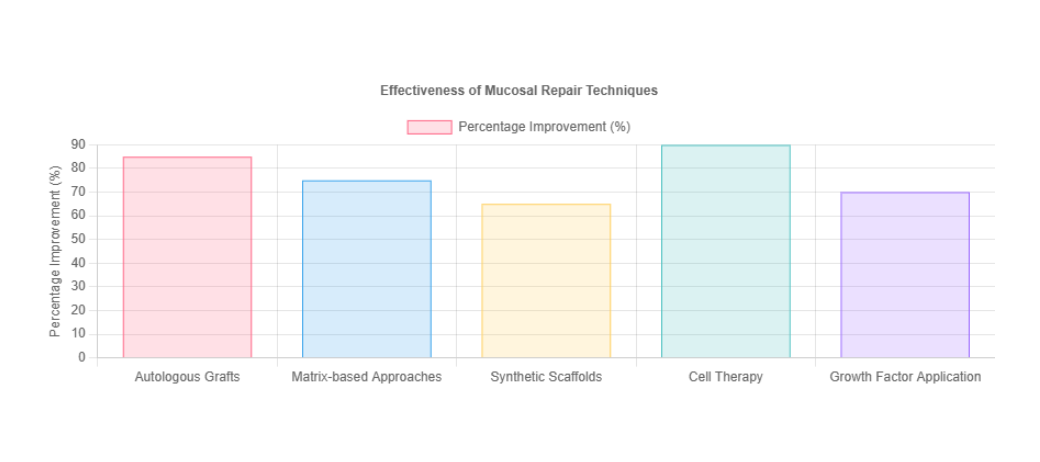
This chart illustrates the effectiveness of different mucosal tissue repair solutions based on clinical applications and case studies. The data showcases the percentage improvement in mucosal tissue repair across various methods, indicating their efficacy.
FAQs
Q1: What is mucosal tissue repair?
Mucosal tissue repair involves healing injuries and diseases affecting mucosal surfaces. It’s vital in regenerative medicine.
Q2: How can current techniques improve healing rates?
Techniques like biologically active matrices and stem cell therapy can enhance healing rates by up to 40%.
Q3: What are bioengineered scaffolds?
Bioengineered scaffolds mimic natural tissue and support cell growth. They show promise in improving repair methods.
Q4: What challenges exist with tissue integration?
Integration with host tissue can be difficult. The immune response often complicates successful outcomes.
Q5: What percentage of patients experience complications?
Nearly 30% of patients face complications from existing repair methods, according to a recent study.
Q6: Why is collaboration important in this field?
Collaboration between biologists and materials scientists is crucial for overcoming challenges in mucosal tissue repair.
Q7: What biomaterials are supporting mucosal healing?
Hydrogels and nanofibers are effective. They maintain moisture and create environments conducive to healing.
Q8: What is the projected growth of the biomaterials market?
The global biomaterials market is expected to reach \$175 billion by 2026, reflecting increased interest in healing efficiency.
Q9: Why is ongoing research needed in this area?
The complexity of mucosal healing is still not fully understood, necessitating further research to optimize biomaterials.
Q10: What is essential for future advancements?
Future advancements depend on better understanding the cellular environment and developing adaptable solutions for patients.
Conclusion
The article “2026 How to Achieve Effective Mucosal Tissue Repair Solutions?” explores the critical aspects of mucosal tissue repair, beginning with a comprehensive understanding of the structure and function of mucosal tissues. It highlights the various challenges encountered in the repair process and reviews current techniques that have been utilized to enhance healing.
Furthermore, it delves into innovative biomaterials designed to promote mucosal tissue repair, emphasizing advancements in regenerative medicine that provide new avenues for treatment. The article also looks ahead to future trends and technologies in mucosal repair solutions, supported by clinical applications and case studies that illustrate the effectiveness of these approaches. Collectively, this discussion underscores the importance of ongoing research and innovation in achieving effective mucosal tissue repair.
Related Readings
What is the Best Buy Amenorrhea Remedies Products You Should Consider?
How to Choose the Best Nootropic herbal teas for Boosting Focus?
Where to Buy Premium Menstrual Relief Tea Online?
best pcos tea for Hormonal Balance and Health Benefits?
2026 How to Choose Trending Bloom Hormone Balance Tea?
Effective Period Pain Management Tips for Relief and Comfort?
|
L
|
Lila Lila is a dedicated marketing professional with a deep expertise in functional herbal wellness. She plays a pivotal role in the development and promotion of personalized nutrition solutions that cater to individual needs. With a passion for holistic health, Lila regularly updates the company’s research and guides on mucosal wellness and herbal nutrition. |