Why Your Acne Keeps Coming Back?






Table of Contents
If you’ve ever looked in the mirror and thought, “I just got rid of this last week, and now it’s back,” you are far from alone. Acne is the most common skin condition in the United States, affecting up to 50 million Americans annually, and for many, it doesn’t just show up once and disappear forever. Instead, it lingers, resurfaces, and cycles through the same spots on the face over and over again. That chin pimple that comes back right before your period? The cluster of breakouts on your jawline that won’t quit no matter what cleanser you use? Recurring acne is frustrating, exhausting, and often misunderstood.
But here’s what dermatologists want you to know: recurring acne isn’t random. It has underlying causes, and there are real, evidence-based ways to break the cycle. Let’s walk through why your acne keeps coming back and which methods are actually worth trying.
Why Does Acne Keep Coming Back?
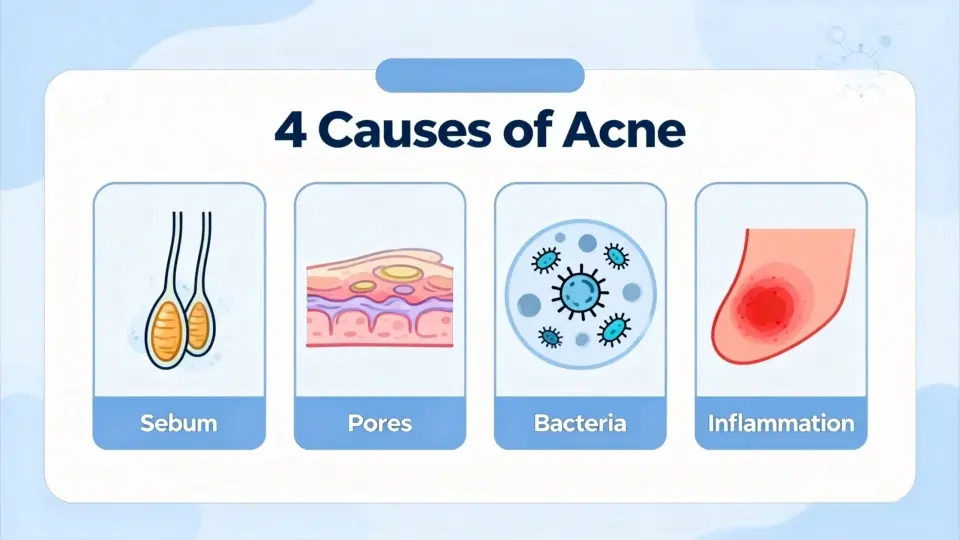
You can think of acne as a problem with four moving parts: too much oil (sebum), clogged pores, bacteria called Cutibacterium acnes, and inflammation. As long as any of these factors remain active, breakouts can return. But for many people, specific triggers are what turn occasional pimples into a recurring pattern.
Hormones are perhaps the biggest culprit, especially for adult women. The jawline, chin, and lower cheeks are particularly sensitive to hormonal shifts, which is why dermatologists often call this area the “hormonal zone”. Fluctuations in androgens like testosterone stimulate the skin’s oil glands to go into overdrive, creating the perfect environment for clogged pores and inflamed breakouts. If your acne flares like clockwork around your period or during stressful weeks, hormones are likely playing a major role.
Using the wrong products is another common mistake. Many people unintentionally make acne worse by over-washing, harsh scrubbing, layering too many active ingredients, or constantly switching products. An irritated skin barrier can actually become more inflamed, which paradoxically worsens acne symptoms rather than improving them.
And perhaps the most frustrating reason of all: you’re simply not treating it long enough. Most medically recommended acne treatments require at least 6 to 8 weeks to show improvement and 12 weeks or longer for full results. Quitting too early is one of the most common reasons acne doesn’t clear. Patience, as unsatisfying as it sounds, is part of the treatment.
Methods Worth Trying
If your acne keeps coming back, here’s what dermatologists and current clinical guidelines recommend.
1. Start with Science-Backed Over-the-Counter Ingredients
You don’t always need a prescription to get results. The most effective over-the-counter acne fighters include:
- Benzoyl Peroxide (2.5%–10%): This ingredient kills acne-causing bacteria, reduces inflammation, and helps remove excess oil and dead skin cells. Studies show that 2.5% benzoyl peroxide is just as effective as higher concentrations but causes less irritation.
- Salicylic Acid (1%–2%): A beta hydroxy acid (BHA) that exfoliates inside the pores, salicylic acid is particularly effective for blackheads and whiteheads.
- Adapalene 0.1%: A topical retinoid that was once prescription-only and is now available over the counter. It works by normalizing skin cell turnover and preventing clogged pores before they start.
According to the 2024 American Academy of Dermatology (AAD) guidelines for acne management, strong recommendations are made for benzoyl peroxide, topical retinoids, and topical antibiotics. For acne that is severe, causing psychosocial burden or scarring, or failing standard therapy, oral isotretinoin is strongly recommended.
2. Consider Topical Retinoids as a First-Line Defense
If you only take away one thing from this guide, it’s that topical retinoids should be at the heart of any recurring acne routine. For mild to moderate acne, a first-line approach often consists of a 12‑week course of a fixed combination of topical adapalene with benzoyl peroxide or topical tretinoin with clindamycin. These ingredients work by normalizing how skin cells shed, which prevents the microcomedones that later become full‑blown pimples.
3. Investigate Hormonal Treatments if You’re an Adult Woman
If your breakouts consistently cluster along your jawline, chin, or lower cheeks, topicals alone may not be enough. Hormonal options include:
- Combined oral contraceptives (birth control pills containing both estrogen and progestin) — four are FDA‑approved specifically for acne
- Spironolactone — though not FDA‑approved for acne, it is widely used off‑label with excellent results, particularly for adult women
- Topical clascoterone — the first topical antiandrogen, scientifically proven to reduce inflammatory lesions in moderate to severe acne
4. Stick With It — And Don’t Play Product Roulette
As mentioned earlier, acne treatments take time. The AAD‑aligned evidence suggests that patients should expect at least 4 to 8 weeks to see improvement and up to 16 weeks for acne to fully clear. Switching products every two weeks because you don’t see immediate results is a surefire way to stay stuck in the breakout cycle. Pick a regimen of proven ingredients, give it three full months, and reassess with your doctor if needed.
What About Sea Buckthorn Oil?
Given the rise of natural alternatives, you’ve probably seen sea buckthorn oil floating around wellness circles as a skin hero. This naturally leads many people to ask: is sea buckthorn oil good for skin in general, and specifically for recurring breakouts? The honest answer is that ongoing, definitive clinical research on sea buckthorn oil for acne is still relatively limited. However, when looking at sea buckthorn oil for skin care as a whole, the existing science on its skin benefits makes it worth a closer look — with realistic expectations.
Notable Findings (What We Actually Know):
- Antibacterial Properties Against Acne Bacteria: Some in‑vitro tests have shown that sea buckthorn seed oil has inhibitory effects against Staphylococcus aureus and — importantly — against Propionibacterium acnes (now known as Cutibacterium acnes), the primary bacteria involved in acne. Multiple studies have confirmed that sea buckthorn flavonoids exhibit antimicrobial, anti‑inflammatory, and skin‑brightening effects.
- Clinical Improvement in Sebum Reduction: A single‑blind, randomized study involving 50 participants evaluated topical emulsions containing sea buckthorn extracts and found a significant reduction in sebum (oil) levels on treated areas, suggesting that sea buckthorn could be a safe and well‑tolerated option for managing mild to moderate acne.
- Skin Hydration and Barrier Repair: Human clinical trials have confirmed that oral sea buckthorn oil supplementation leads to noticeable increases in skin moisture, elasticity, and softness. One 12‑week, double‑blind, placebo‑controlled study of 40 healthy women found that daily sea buckthorn oil increased skin hydration by 8% and collagen density by 10%.
- Anti‑Inflammatory and Wound Healing: Sea buckthorn oil contains rare omega‑7 fatty acids (palmitoleic acid) which have been shown to support skin barrier repair and reduce transepidermal water loss (TEWL). These anti‑inflammatory effects may be relevant for acne, which is fundamentally an inflammatory condition.
- Overall Cosmeceutical Potential: A comprehensive 2025 review on the cosmeceutical applications of sea buckthorn concluded that its extracts and oils have wound healing effects, collagen synthesis enhancement, and anti‑acne potential through multiple mechanisms.
The Bottom Line: Sea buckthorn oil is not a standard, established acne treatment. However, the evidence suggests that for general skin health, the answer is promising. Its demonstrated anti‑inflammatory properties, antibacterial activity against C. acnes, and ability to strengthen the skin barrier indicate that sea buckthorn oil for skin care can be a useful supportive addition — especially for those whose acne is driven in part by inflammation or a compromised skin barrier.
When to See a Dermatologist
Recurring acne isn’t just a cosmetic nuisance — it’s a medical condition that can have real impacts on mental health and quality of life. You should consider seeing a dermatologist if:
- Your acne is painful, deep, or cystic
- It’s leaving behind scars or dark spots (post‑inflammatory hyperpigmentation)
- Over‑the‑counter products haven’t produced meaningful improvement after 12 weeks
- Your acne is causing significant emotional distress
Final Thoughts
Recurring acne can feel like a battle you’ll never win, but that isn’t true. Most people with persistent breakouts simply haven’t yet found the right combination of treatments or haven’t given the right ones enough time to work. By understanding the root causes — hormones, wrong products, inadequate duration of therapy — and adopting a targeted, evidence‑based approach that includes ingredients like benzoyl peroxide, salicylic acid, adapalene, and possibly hormonal therapies, you can break the cycle.
Natural ingredients like cardiovascular/himalayan-sea-buckthorn-oil" target="_blank">sea buckthorn oil may support your skin’s health in a general sense — improving barrier function, fighting inflammation, and soothing irritation — and that can make a meaningful difference in how your skin feels and recovers. But they are best thought of as supportive players on a team, not the star players. The stars, backed by decades of rigorous clinical research, remain the treatments your dermatologist knows best.
Related Reading
👉 5 Ways to Keep Your Skin Hydrated
👉 What Is omega-7? The Beauty Fat for Skin Hydration
👉 Does Sea Buckthorn Oil Really Help with Dry Skin?
👉 Seabuckthorn Oil Guide: Uses, Benefits, and More
👉 Omega-7 Saving the Office Screen Clan Dryness Symptoms
About the Author

Laicuherb
The core content team at Laicuherb is a collective of experts, including health professionals, consultants in Traditional Chinese Medicine, and experienced content strategists. Some articles are authored by our brand's founders or R&D scientists. Laicuherb team has deep expertise in herbal health, integrating the wisdom of traditional medicine, modern nutrition, and women's health research to transform ancient wellness principles into practical, accessible content for everyday life.
© 2026 Laicuherb. Your State Your Tea.