Introducing Laicuherb: Buy Bloom Hormone Balance Tea Online Store for Harmonious Living Backed by ISO-FSSC Certification






Quick Summary
Chronic stress genuinely can interfere with the hormonal signaling that governs ovulation — that part is well-documented physiology. What's less straightforward is what an herbal tea can realistically do about it. This guide breaks both down honestly for anyone comparing options before they Buy Bloom Hormone Balance Tea Online Store.
This article reflects general research and traditional herbal use, not medical advice. If you have a diagnosed hormonal condition or are tracking ovulation for fertility reasons, talk to a doctor before relying on herbal support alone.

How Stress Actually Interferes With Ovulation-Phase Hormones
This part is real, established physiology: the hypothalamus-pituitary-ovarian (HPO) axis — the signaling chain that governs the release of estrogen and progesterone around ovulation — is sensitive to chronic stress. Sustained high cortisol can suppress the signals that trigger ovulation and the progesterone rise that follows it, which is why prolonged stress is a recognized (if not sole) contributor to irregular or absent ovulation in some people. This is sometimes called functional hypothalamic dysfunction in more severe cases, though for most people the effect is milder — show up as a slightly off cycle rather than a missed one.
What's in Bloom Hormone Balance Tea, and What Each Ingredient Actually Does
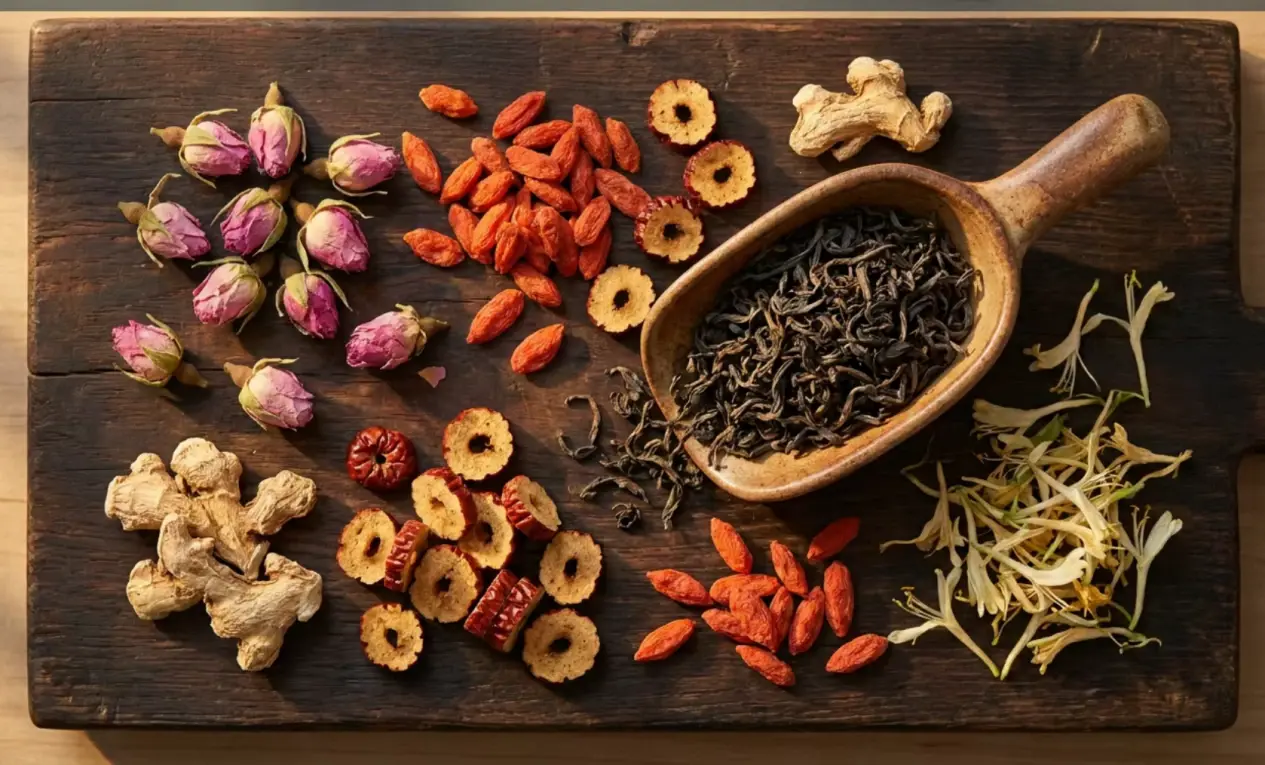
The blend combines honeysuckle flower (Flos Lonicerae), Aster flaccidus herb, rose, ginger, brown sugar, goji berry (wolfberry), and jujube (red date). Worth being specific about what's behind each:
Ginger has the most direct relevant evidence — multiple clinical trials support its mild anti-inflammatory and circulation-supporting effects, mainly studied in the context of menstrual cramping rather than ovulation specifically, but a reasonably well-evidenced ingredient generally.
Goji berry and jujube are classic TCM "blood and qi nourishing" ingredients — traditionally used to support overall vitality, with some antioxidant content, but no strong clinical research isolating an effect on ovulation or hormone balance specifically.
Rose contributes aroma and mild antioxidant compounds; traditionally used in TCM for mood and circulation support, though direct hormone-related research is thin.
Honeysuckle flower (Flos Lonicerae) is traditionally used in TCM primarily for its "heat-clearing" and mild antibacterial properties — think colds and inflammation — rather than for reproductive or hormonal support specifically.
Aster flaccidus is worth being transparent about: in traditional Chinese medicine, aster species (including the related and better-documented Aster tataricus) are used almost exclusively as a lung/respiratory herb — for cough and phlegm — not for hormonal or reproductive purposes. Its inclusion here is more consistent with general TCM wellness-blend tradition than with any documented hormone-related mechanism.
Bottom line: this is a traditional wellness blend with one ingredient (ginger) carrying real clinical evidence, and the rest contributing flavor, traditional nourishment, and overall TCM-blend logic rather than direct, documented hormone-balancing effects. That's not a criticism of the product — most herbal wellness teas work this way — just an honest picture of what's actually backed by research versus what's traditional framing.
ISO-FSSC 22000: What These Certifications Actually Verify
These two show up often in this category, so it's worth being precise about what they cover:
- ISO (International Organization for Standardization) certifications are a broad family of management-system standards — for a food brand, this typically relates to quality management processes generally.
- FSSC 22000 (Food Safety System Certification) specifically verifies that a manufacturing facility's food safety management system meets a recognized international benchmark — covering things like hygiene protocols, contamination controls, and traceability through the supply chain.
What both certifications confirm: the manufacturing facility follows a documented, audited food safety and quality process. What they don't confirm: that the tea balances hormones, supports ovulation, or produces any specific physiological effect. That's a separate question from manufacturing safety, and it's worth not conflating the two — a brand can be fully ISO/FSSC certified and still be making efficacy claims that go beyond what the herbs themselves are shown to do.
Buying Direct from the Manufacturer
Laicuherb sells Bloom Hormone Balance Tea direct-to-consumer, which has a genuine, modest advantage: fewer intermediaries generally means less time between processing and your cup, and more direct access to ask the brand about sourcing or certification specifics for a given batch. It's a real logistics benefit — worth knowing, just not a claim about the tea's effect on hormones either.
About Bloom Hormone Balance Tea, by Laicuherb (Xi'an Chinaherbs Commerce Co.,Itd)
Bloom Hormone Balance Tea is formulated for the ovulation phase specifically, one of four teas in Laicuherb's Cycle Tea Set (Ease for menstruation, Pure for the follicular phase, Bloom for ovulation, Rest for the luteal phase). The brand's stated certifications are ISO-FSSC, COI, and COA — worth confirming directly with Laicuherb which applies to the specific batch you're ordering. Anyone wanting more detail on the brand's own framing of how this tea fits into the ovulation window can read its explainer on how Bloom Hormone Balance Tea supports you during ovulation, with the same framing as everything else here: it's the brand's product philosophy, not a third-party clinical review.
Website: https://www.laicuherb.com/
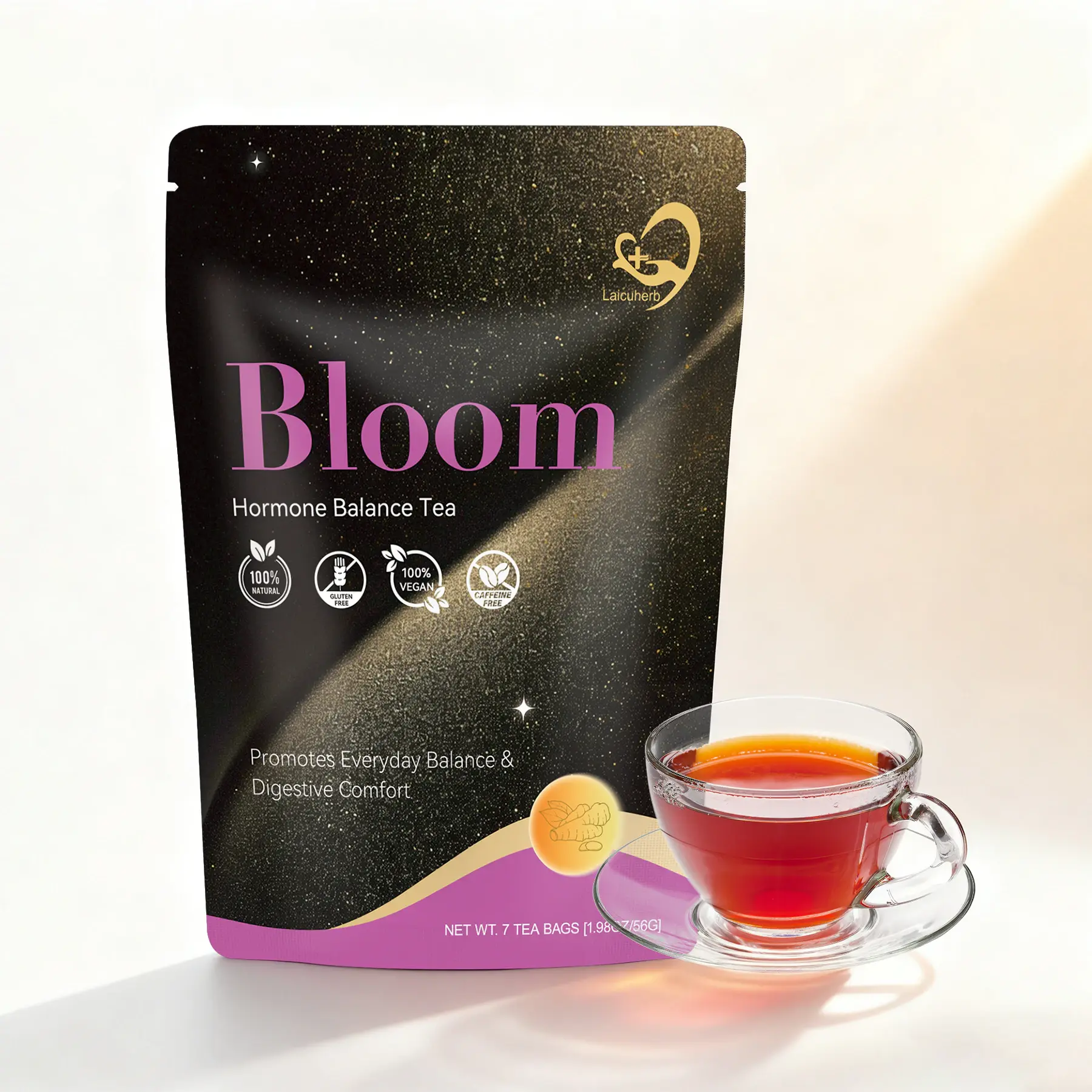
Laicuherb Bloom Hormone Balance Tea
A traditional TCM-based formulation engineered for physical lightness and emotional grounding during the ovulation peak. Formulated with Flos Lonicerae and rose buds under audited FSSC food safety standards.
Buy Bloom Hormone Balance Tea Online Store →FAQ
Does this tea actually fix hormone imbalances caused by stress?
No — be cautious of that framing. Chronic stress affecting ovulation-related hormones is real physiology, but there's no direct clinical evidence that an herbal tea reverses it. Think of this as a calming daily ritual that may support general wellbeing during a stressful cycle, not a corrective intervention for hormonal dysfunction.
What does ISO-FSSC certification actually tell me about this product?
It tells you the manufacturing facility follows an audited food safety management system — contamination controls, hygiene protocols, traceability. It doesn't tell you anything about whether the tea affects hormones or ovulation. Those are two separate questions, and it's worth not letting a real manufacturing certification stand in for an efficacy claim it doesn't make.
Which ingredient in this blend is actually backed by research?
Ginger has the most direct clinical evidence among the ingredients here, mainly studied for anti-inflammatory and circulation effects. The rest of the blend (honeysuckle, aster, rose, goji, jujube) is rooted in traditional TCM wellness use rather than dedicated clinical research on hormone balance specifically.
Why is there a lung-related herb (aster) in a hormone balance tea?
Fair question — aster species are traditionally used in TCM mainly for respiratory support (cough, phlegm), not hormonal or reproductive purposes. Its presence here likely reflects general TCM wellness-blend tradition rather than a documented hormone-specific mechanism; it's worth not assuming every ingredient in a blend has a direct connection to the product's main positioning.
Can drinking this tea help me get pregnant?
Be cautious here. The product is designed to support general wellbeing during the ovulation window, not as a fertility treatment, and there's no clinical evidence establishing a pregnancy-related benefit. If conception is the goal, that's a conversation for a doctor or fertility specialist, not something to expect from a tea.
Is buying direct from Laicuherb actually better than buying through a retailer?
Mainly in terms of freshness and the ability to ask the brand directly about sourcing or certification details for a specific batch — that's a real, if modest, logistics advantage. It's not a difference in how the tea affects your body.
Related Readings
- When to Drink Bloom Hormone Balance Tea in Your Cycle Link Placeholder →
- The Best Herbal Tea to Drink During Your Ovulatory Phase Link Placeholder →
- How to Improve Your Health and Energy Every Day of the Month Link Placeholder →
About the Author
Laicuherb
The core content team at Laicuherb is a collective of experts, nutritionists, and wellness advocates dedicated to translating ancient herbal traditions into modern, scientifically-backed hormonal health guides.