Discover Laicuherb: Buy Ease Period Comfort Tea Online Store to Support Your Natural Rhythm with FDA-Registered Quality






Quick Summary
Menstrual cramps are driven largely by prostaglandins — compounds that trigger uterine contractions and temporarily restrict blood flow to the area. This guide breaks down what's actually known about the herbs in a typical warming period tea (ginger has real clinical backing; others are traditional but less studied), explains what FDA facility registration actually covers, and walks through Laicuherb's Ease Period Comfort Tea as a concrete example for anyone comparing options before they Buy Ease Period Comfort Tea Online Store.
This article reflects general research and traditional herbal use, not medical advice. If period pain is severe enough to disrupt your daily life, that's worth bringing to a doctor rather than managing with tea alone.
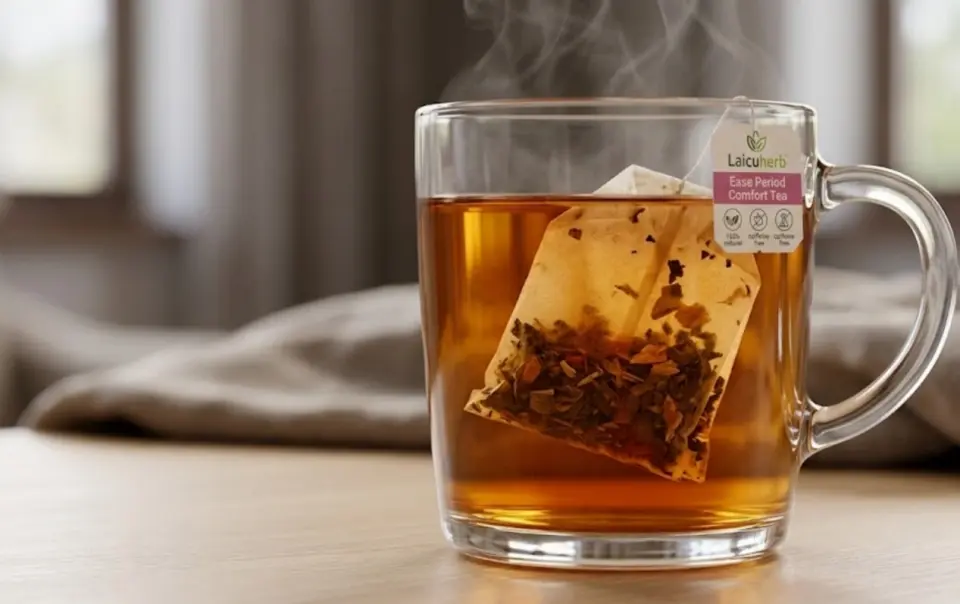
Why Period Cramps Actually Happen
The cramping sensation during menstruation comes mostly from prostaglandins — hormone-like compounds the uterine lining releases as it sheds. Higher prostaglandin levels cause stronger, more frequent uterine contractions, and those contractions temporarily squeeze the blood vessels supplying the uterus. That brief restriction in blood flow is what produces the cramping, aching pain — a similar mechanism to how a muscle cramp hurts when it contracts hard and cuts off its own circulation.
This is also why warmth helps: heat encourages blood vessels to dilate, which counteracts that contraction-induced restriction and tends to ease the pain somewhat, even if it doesn't address the prostaglandin levels themselves. It's a real, mechanical effect — not just a comfort association — which is part of why heating pads and warm drinks are genuinely useful, not just folk remedies.
What the Ingredients in Ease Tea Actually Do (and Don't)
The blend combines several traditional Chinese herbal ingredients: ginger, angelica (dong quai), peony petal, longan, red dates (jujube), wolfberry (goji), and rose. Worth separating what's backed by clinical research from what's traditional but less studied:
Ginger has real evidence behind it. Several randomized controlled trials and meta-analyses have found oral ginger more effective than placebo for primary dysmenorrhea, with some trials showing it performs comparably to NSAIDs like ibuprofen for pain severity. The typical studied dose is 750–2000mg of ginger powder during the first 3–4 days of the cycle — higher than what you'd likely get from one cup of tea, so think of this as supportive rather than a clinical dose.
Angelica (dong quai) is the traditional "female ginseng" of TCM, used for centuries for menstrual and blood-circulation support. The honest picture: most of the supporting research is animal or in-vitro, and the one rigorous human trial (in postmenopausal women, for a different use case) found no significant benefit over placebo. It's typically used in multi-herb formulas rather than alone, which is consistent with how it's used here.
Peony petal is worth a specific note: most of the TCM research on peony for menstrual cramps focuses on the root (often combined with angelica in classic formulas), not the petal. The petal is more commonly used for its mild aroma and antioxidant content than for any documented cramp-relief effect, so its role here is likely more about flavor and tradition than active relief.
Longan, red dates, and wolfberry are classic TCM "blood and qi nourishing" ingredients — gentle, food-like, and traditionally used to support overall vitality during menstruation rather than to directly target cramping. There isn't strong clinical research isolating their effect on period pain specifically, but they're well-tolerated and contribute to the tea's warming, comforting character. For people who want to dig deeper into how these ingredients are traditionally combined, this breakdown of best ease period comfort tea blends for natural period comfort goes into more detail on blend logic specifically.
Bottom line: ginger is the ingredient doing the most evidence-backed work here. The rest of the blend is rooted in genuine TCM tradition and contributes to the overall warming effect and flavor, but shouldn't be expected to independently resolve cramps the way ginger or an NSAID might.
How to Actually Vet a Period Tea Brand Online
1. Ingredient Sourcing and Processing Transparency
A brand that names the specific plant part used (root vs. petal, fresh vs. dried ginger) and explains its extraction method is giving you more useful information than one that just lists "herbal blend."
2. FDA Facility Registration — What it Actually Covers
This is one of the more misunderstood credentials in the space, so it's worth being precise about it:
- What it means: the manufacturing facility has registered with the FDA, which puts it within FDA's regulatory oversight and means it's expected to follow Current Good Manufacturing Practice (cGMP) rules — sanitation, equipment calibration, batch traceability, and consistent labeling.
- What it doesn't mean: the FDA hasn't reviewed or approved any specific health claim about what the tea does. Dietary supplements and herbal teas aren't subject to the same pre-market efficacy review as drugs, registration or not.
- The honest takeaway: FDA registration is a real, meaningful signal about manufacturing accountability — it tells you the facility can be traced and inspected. It tells you nothing about whether the tea relieves cramps. A brand that's transparent about this distinction is more trustworthy than one that blurs "registered" into "approved."
3. A Genuinely Clean Ingredient List
Watch for added flavoring, preservatives, or fillers diluting the actual herbal content — the ingredient list should largely just be the named herbs.
About Ease Period Comfort Tea, by Laicuherb
Ease Period Comfort Tea is one of four teas in Laicuherb's Cycle Tea Set, each designed around a different phase of the menstrual cycle — Ease for menstruation, Pure for the follicular phase, Bloom for ovulation, and Rest for the luteal phase. The blend combines longan, red dates, wolfberry, angelica, dried ginger, Pingyin roses, and peony petal, and is intended for use during the period itself, with some users starting 1–2 days early.
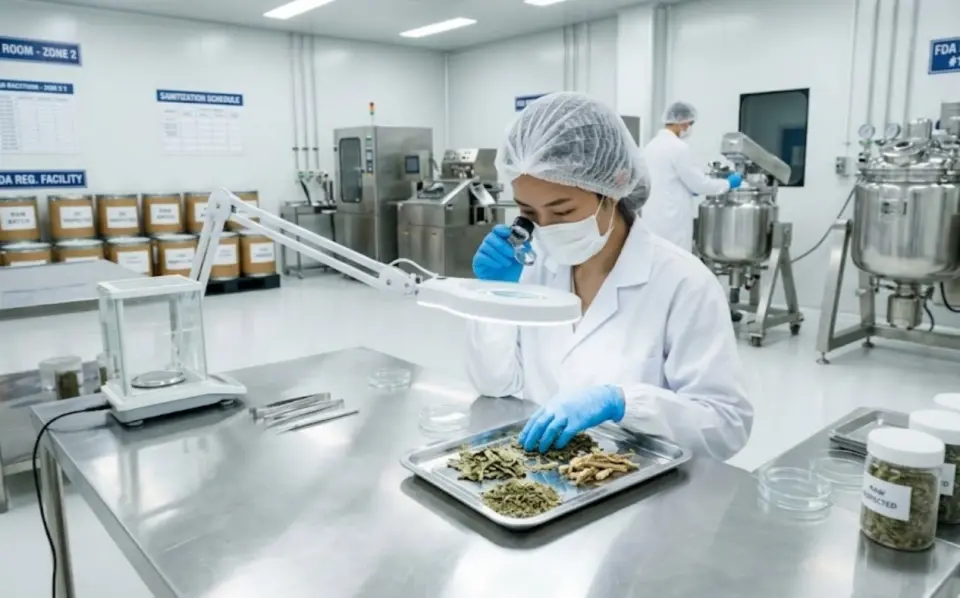
Laicuherb manufactures through an FDA-registered facility, which speaks to manufacturing accountability and traceability rather than to any specific health claim — worth confirming directly with the brand exactly what that registration and any additional certifications cover for the batch you're ordering, rather than assuming blanket coverage of everything stated in this guide.
Website: https://www.laicuherb.com/
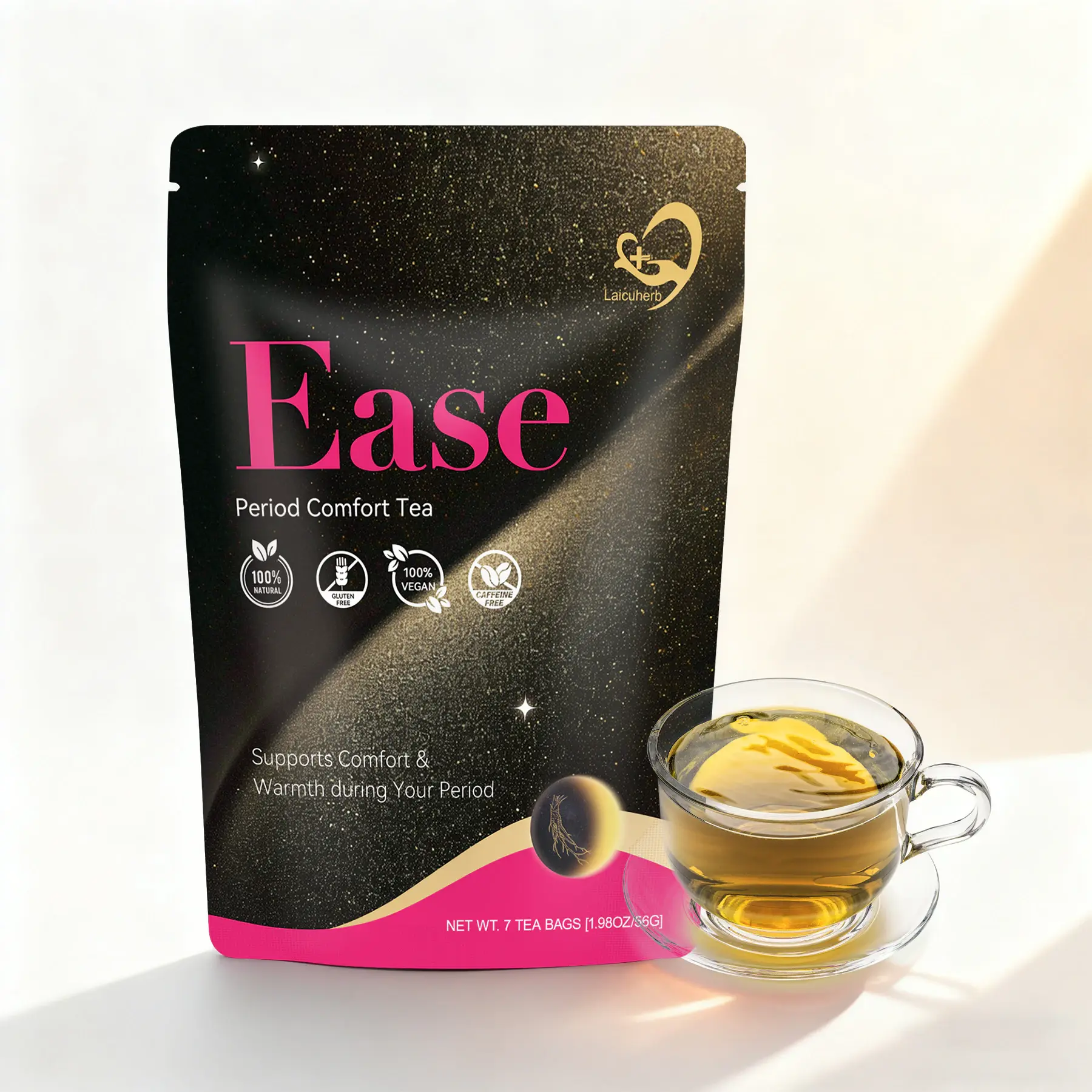
Laicuherb Ease Period Comfort Tea
A scientifically formulated, caffeine-free herbal infusion designed to deliver deep warming comfort, counteract prostaglandin tension, and promote healthy pelvic circulation during your bleeding phase.
Buy Ease Period Comfort Tea Online Store →FAQ
When during my cycle should I start drinking this tea?
It's designed for use during menstruation itself. If you want to get ahead of cramps rather than react to them, starting 1–2 days before your period is the brand's suggested approach — though there's no strong evidence that timing it precisely changes the outcome versus just drinking it consistently once cramps start.
Can this replace ibuprofen or other period pain medication?
Not reliably, especially for moderate-to-severe cramps. Ginger has decent evidence putting it in a similar range to NSAIDs for some people, but a single cup of tea delivers less ginger than the doses used in those studies. Think of it as a gentler, food-based supplement to your usual approach, not a swap — and if pain is severe enough to disrupt your day, that's worth raising with a doctor rather than managing with tea alone.
Is this safe to drink alongside ibuprofen or blood thinners?
Worth a second thought, not necessarily an automatic no. Angelica (dong quai) has mild blood-thinning properties and is generally advised against combining with NSAIDs or anticoagulant medication due to increased bleeding risk in some case reports. If you're on blood thinners or have a bleeding disorder, it's worth checking with a doctor or pharmacist before adding this in.
I think I might be pregnant — is this tea still okay during my period?
This is genuinely worth pausing on. Angelica is traditionally avoided during pregnancy because of its potential uterine-stimulating effect, and most sources advise against it if pregnancy is a possibility. If your period is late, irregular, or you have any reason to suspect pregnancy, it's better to confirm that first before continuing.
What's the difference between this and the other teas in the Cycle Tea Set?
Each tea in the set targets a different phase: Ease (this one) for menstruation and warming relief, Pure for the follicular phase, Bloom for ovulation, and Rest for the luteal/sleep-focused phase. If you've already bought the full set, it includes one pack of Ease — you'd only need to buy it separately if you go through it faster than the others.
Does FDA registration mean this product's health claims are officially approved?
No — registration and approval are different things. FDA facility registration means the manufacturing site follows cGMP rules and is subject to inspection; it doesn't mean the FDA has reviewed or confirmed any specific claim about what the tea does for cramps. That's true industry-wide for dietary supplements and herbal teas, not a knock against this brand specifically — just a distinction worth knowing before you buy from any brand making similar claims.
Related Readings
- Effective Home Remedies for Managing Period Pain Naturally Link Placeholder →
- The Best Herbal Tea to Drink During Your Ovulatory Phase Link Placeholder →
- How to Improve Your Health and Energy Every Day of the Month Link Placeholder →
About the Author

Laicuherb
The core content team at Laicuherb is a collective of experts, nutritionists, and wellness advocates dedicated to translating ancient herbal traditions into modern, scientifically-backed hormonal health guides.
Disclaimer: This product is not intended to diagnose, treat, cure, or prevent any disease. It is a health tea for general wellness. Consult a healthcare professional before beginning any new wellness regimen, especially if pregnant or taking prescription medications.