Can Natural Insomnia Tea help re-establish healthy sleep patterns?






What I Noticed After Trying a Simple 14-Day Bedtime Tea Routine
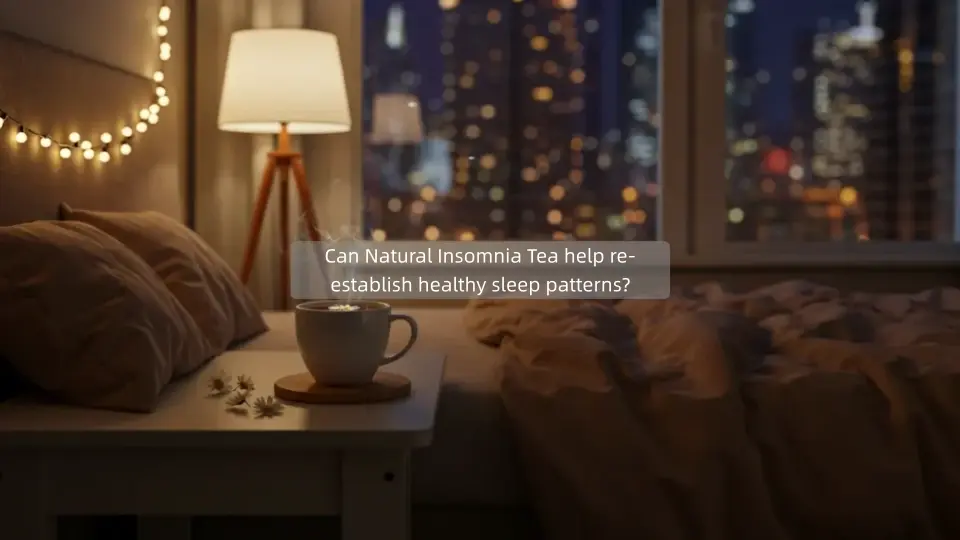
A few months ago, I got into the habit of checking the clock multiple times every night.
12:47 AM.
1:36 AM.
2:11 AM.
Sometimes I wasn’t even fully awake — just alert enough to realize I still wasn’t sleeping properly.
What made it frustrating was that I didn’t feel like a person with “serious insomnia.” I wasn’t pulling all-nighters or lying awake until sunrise. I was just stuck in that weird middle ground where your body feels tired, but your brain never fully powers down.
I tried the usual things for a while:
- melatonin gummies
- sleep playlists
- “no phone before bed” rules
- magnesium supplements
Some helped temporarily. Some did absolutely nothing.
The thing that surprised me most, honestly, was that a simple nighttime tea routine ended up helping more than I expected — not because it knocked me out, but because it slowly changed how my evenings felt.
And I think that distinction matters.
Why I Started Looking Into Sleep Tea in the First Place
At first, I was skeptical.
Most “sleep teas” sounded overly marketed to me. A lot of them use the same language:
- relax
- unwind
- calm your mind
- drift into peaceful sleep
After a while, every product page starts sounding identical.
But eventually I realized my real issue probably wasn’t a total inability to sleep.
It was that I never actually transitioned into rest mode at night.
I would work late, stare at screens until midnight, answer messages in bed, then somehow expect my brain to immediately switch off the second my head touched the pillow. Looking back, that makes absolutely no sense.
So instead of searching for something stronger, I became more interested in creating a consistent “shutdown routine.” That’s what led me to herbal sleep tea.
The Part Most People Ignore: Sleep Is More About Rhythm Than Exhaustion
One thing I didn’t understand before is that being tired and being ready for sleep are not always the same thing.
You can feel exhausted and still have a nervous system that’s overstimulated. That was probably happening to me most nights.
Especially after stressful workdays, I noticed my brain would stay oddly active even when my body felt drained. I’d replay conversations, think about unfinished tasks, or randomly remember embarrassing things from years ago right as I was trying to sleep.
Apparently that’s pretty common.
A lot of modern sleep problems are tied to overstimulation:
- late-night screen exposure
- elevated cortisol
- irregular schedules
- too much caffeine
- constant mental input
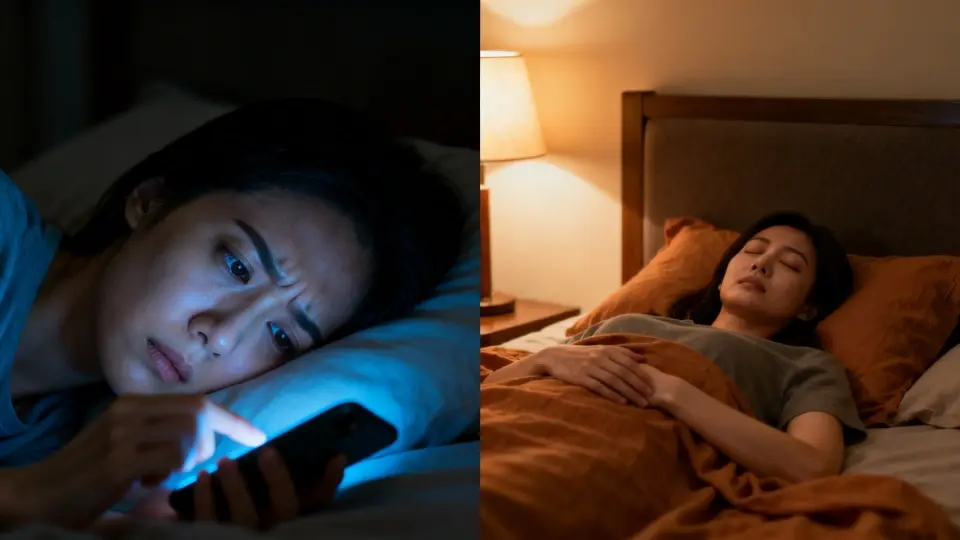
The Tea Itself Wasn’t Magical — The Routine Was
This was probably the biggest surprise. By the second week, I honestly think the ritual mattered almost as much as the ingredients.
Every night, I started doing roughly the same thing:
- make tea around 10 PM
- dim the lights
- stop checking emails
- stay off social media for 30–45 minutes
- sit quietly or read something light
That repetition started changing my mental state faster than I expected. At some point, my brain began associating the tea with “the day is over now.”
I know that sounds simple, but people who struggle with sleep probably understand how rare that feeling is. For a long time, nighttime never actually felt calm to me. It just felt like daytime happening in darker lighting.
The Ingredients I Noticed Most
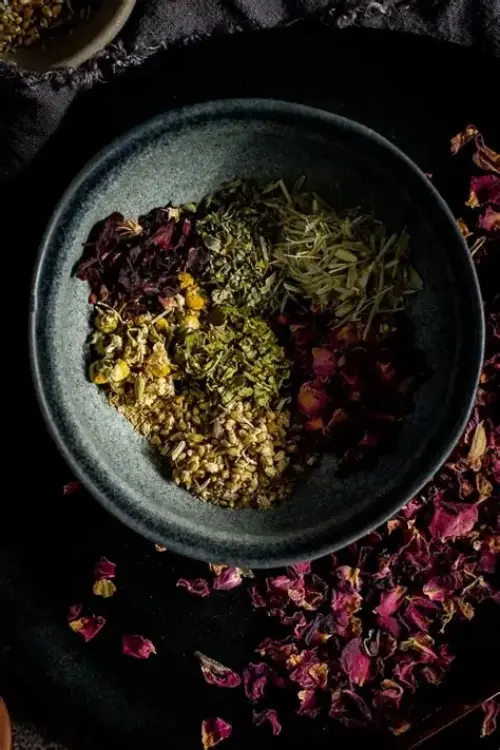
I tried a few different blends over the two weeks, but most included some combination of:
chamomile | valerian root | lavender | lemon balm | lotus seed | jujube
Chamomile was the one I underestimated the most. I always thought of it as one of those overly gentle “grandma remedies” that people mention mostly out of habit.
But after drinking stronger loose-leaf blends consistently, I started noticing something subtle: My thoughts didn’t disappear — they just stopped feeling so loud. That’s the best way I can describe it. Not sedated. Not drugged. Just quieter.
Valerian root felt different. Heavier, maybe. I noticed it more physically than mentally. Some nights I liked that feeling. Other nights I didn’t. That’s another thing people don’t talk about enough: herbal sleep support isn’t always identical from person to person.
What Changed During the 14 Days
I started tracking a few basic things mostly out of curiosity: how long it took me to fall asleep, how often I woke up, and how rested I felt in the morning.
| Day | Estimated Time to Fall Asleep | Night Wakings | General Feeling Next Morning |
|---|---|---|---|
| Day 1 | ~50 min | 4 | Tired |
| Day 4 | ~40 min | 3 | Slightly better |
| Day 7 | ~30 min | 2 | More refreshed |
| Day 10 | ~25 min | 2 | Noticeably calmer |
| Day 14 | ~20 min | 1 | More consistent energy |
One oddly specific thing I noticed around day 6 or 7: I stopped checking the time as much during the night. That probably sounds minor. But people with sleep issues know exactly what that means.
There’s a particular kind of anxiety that comes from repeatedly looking at the clock at 1:13 AM, then 2:04 AM, then 3:22 AM while mentally calculating how exhausted you’ll be the next day. That habit slowly faded. Not instantly. Just gradually. And I think reducing that stress loop helped almost as much as the tea itself.
Some Important Things That Probably Helped Besides the Tea
I don’t want to pretend the tea alone fixed everything. A few other changes likely mattered too:
I stopped scrolling before bed
This one made a bigger difference than I expected. I didn’t realize how mentally alert social media kept me at night until I removed it for a week.
I kept a more consistent bedtime
Even on weekends. Annoying advice, honestly. But it probably works for a reason.
I stopped trying to “force” sleep
This part was surprisingly important. The more aggressively I chased sleep, the more awake I felt. At some point, I started treating bedtime more like a slow transition instead of a performance test. That mental shift helped.
Who I Think Sleep Tea Helps Most
After trying it consistently, I can see sleep tea being especially useful for people who are mentally overstimulated rather than medically unable to sleep. For example:
- people working late on laptops
- anxious overthinkers
- light sleepers
- adults with inconsistent routines
- people trying to reduce melatonin dependence
Who Probably Shouldn’t Expect Miracles
At the same time, I don’t think herbal tea is some universal solution. If someone has:
- severe insomnia
- sleep apnea
- major anxiety disorders
- chronic pain
- heavy caffeine dependence
I think sleep tea works best as support, not as a cure-all. That distinction matters because a lot of sleep products are marketed unrealistically online.
One Thing I Didn’t Expect Emotionally
This part is harder to explain. Around the second week, I realized I wasn’t dreading bedtime as much anymore. That surprised me.
I didn’t realize how much tension I had built around sleep itself until that tension started easing. Before, nighttime felt like a small battle I had to win every day. After a while, it started feeling more neutral again.
And honestly, that emotional shift may have mattered more than falling asleep 20 minutes faster.

So… Can Natural Insomnia Tea Actually Reset Your Sleep Cycle?
I don’t think herbal tea “cures” insomnia overnight. And I’d be skeptical of any article claiming it does.
But I do think a consistent nighttime tea ritual can help retrain the body to slow down again — especially for people whose sleep problems are tied to stress, overstimulation, or chaotic evening habits.
At least in my experience, the biggest change wasn’t suddenly sleeping perfectly. It was that my evenings stopped feeling mentally noisy all the time. That alone ended up improving my sleep more than I expected.
Quick Sleep Tea Routine That Helped Me Most
| Habit | What I Did |
|---|---|
| Tea timing | About 45 minutes before bed |
| Water temperature | Slightly below boiling |
| Phone use | Stopped 30 minutes before sleep |
| Lighting | Dim warm light only |
| Best pairing | Reading or quiet music |
| Duration | About 2 weeks consistently |
Final Thought
I used to think my problem was that I couldn’t sleep.
Now I think the bigger problem was that I never really allowed myself to slow down before bed. That sounds obvious in hindsight. But I genuinely didn’t realize how mentally “on” I stayed every night until I started changing the routine around sleep itself.
The tea helped. But more importantly, it gave me a reason to finally create space for rest again.
About the Author

Laicuherb
The core content team at Laicuherb is a collective of experts, including health professionals, consultants in Traditional Chinese Medicine, and experienced content strategists. Some articles are authored by our brand's founders or R&D scientists. Laicuherb team has deep expertise in herbal health, integrating the wisdom of traditional medicine, modern nutrition, and women's health research to transform ancient wellness principles into practical, accessible content for everyday life.
© 2026 Laicuherb. Your State Your Tea.