A Comprehensive Guide to Authentic Hormone Tea Available Online: Aligning Circadian Rhythms for Optimal Vitality






Quick Summary
The body runs on internal timing systems — daily (circadian) and monthly (menstrual cycle) — that govern when hormones like cortisol, melatonin, and progesterone rise and fall. Modern life (blue light, irregular sleep, stress) disrupts these rhythms, which can show up as fatigue, mood swings, and sluggish metabolism. This guide explains the chronobiology behind that disruption, what to actually check before buying an Authentic Hormone Tea Available Online, and introduces Bloom Hormone Balance Tea — a phase-aligned herbal blend from Laicuherb (Xi'an Chinaherbs Commerce Co., Ltd) — along with what its ingredients can and can't be expected to do.
This article reflects general wellness concepts and traditional herbal use, not medical advice or clinical claims. If you have a diagnosed hormonal condition, talk to a doctor before making major changes to your routine.
Why Circadian Disruption Throws Hormones Off Balance
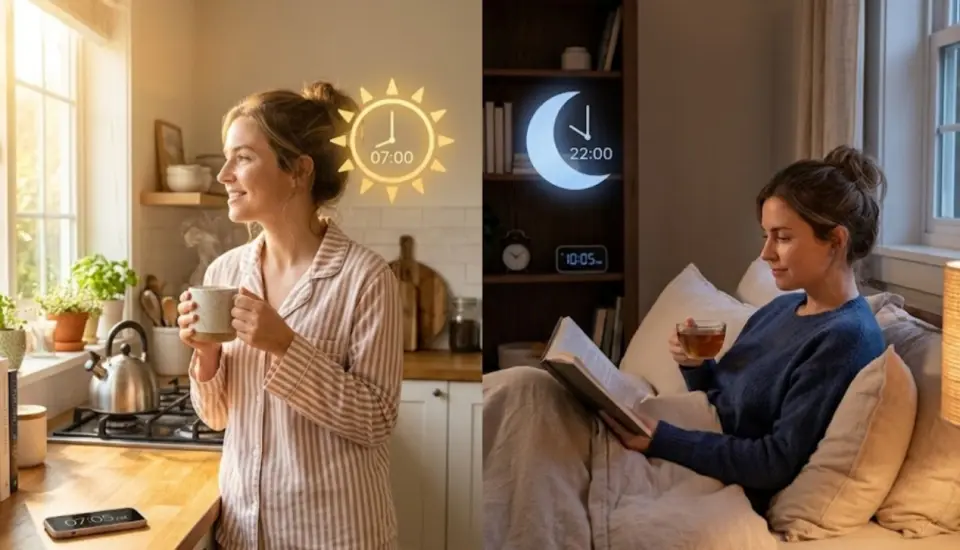
The body's internal clock — centered in a part of the brain called the suprachiasmatic nucleus — coordinates hormone release according to natural light and dark cycles. It's a well-established area of chronobiology: this clock helps time the release of cortisol, melatonin, and other hormones that govern energy and sleep.
The problem is that modern life routinely fights this clock. Blue light at night, inconsistent sleep schedules, and late-night stress can desynchronize the body's internal signals from its actual environment. When that mismatch happens regularly, it can affect cortisol and melatonin timing, which in turn affects energy and sleep quality — and over time, some research links chronic circadian disruption to broader hormonal instability, including reproductive hormones.
In practical terms, this often shows up as a cluster of complaints: ongoing fatigue, mood swings that don't track to anything specific, and a general sense of sluggish metabolism. None of that is exclusive to circadian issues — but it's a real and recognized mechanism worth knowing about if those symptoms sound familiar.
What to Actually Check Before Buying a "Hormone Tea" Online
The wellness market is full of products that look credible but don't hold up to scrutiny. Here's what's worth checking instead of relying on label language:
1. What plant parts and extraction method are actually used
Vague ingredient lists ("proprietary herbal blend") are a weaker signal than a brand that names specific botanical parts (root, leaf, etc.) and explains how they're processed. Standardized extraction matters because it's what makes the concentration of active compounds consistent batch to batch — without it, you're getting an unpredictable dose every time.
2. Independent certifications — and what they actually cover
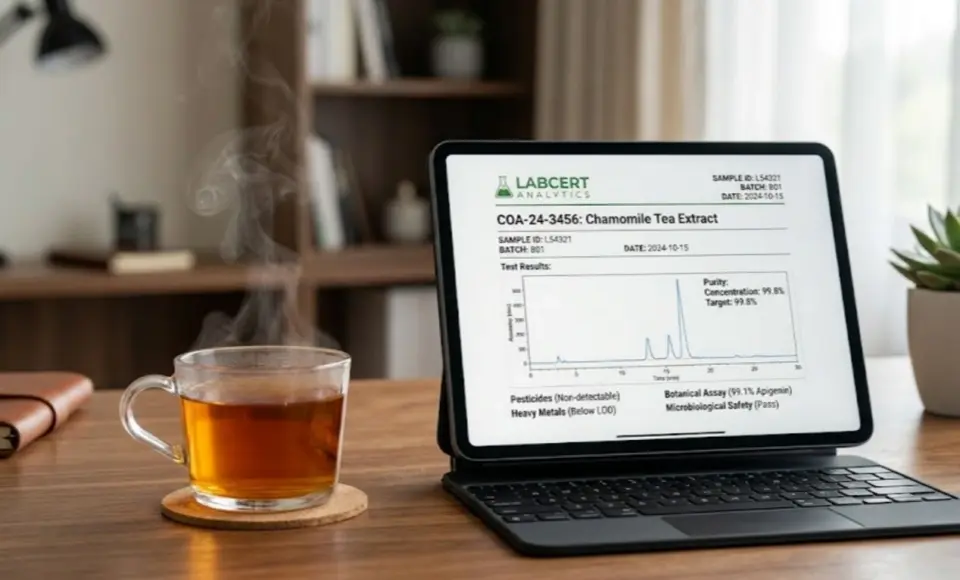
Look for certifications the brand can name specifically, rather than vague claims like "lab tested" with no detail. For Bloom Hormone Balance Tea, the product listing cites ISO-FSSC, COI, and COA as its certifications. Worth knowing what each of these actually means:
- ISO-FSSC (FSSC 22000) is a food safety management system certification — it verifies the manufacturer's facility and processes meet a recognized food safety standard, not that any specific health claim about the tea is true.
- COI (Certificate of Inspection / Certificate of Origin, depending on context) generally relates to verifying the source or inspection status of the raw materials.
- COA (Certificate of Analysis) is the batch-specific lab report confirming what's actually in that batch — ingredient identity, and the absence of contaminants like heavy metals or pesticide residue.
None of these certify efficacy. They're manufacturing and sourcing quality signals, which is exactly what they're useful for — just don't mistake a facility or safety certification for a clinical claim about what the tea does in your body.
3. Genuinely clean ingredient list
Some products use artificial flavoring, synthetic preservatives, or stabilizers to extend shelf life or mask lower-quality raw material. A clean-label product should list the herbs themselves with minimal additional processing aids.
4. Supply chain transparency in general
Beyond any single brand, it's reasonable to expect a company to be able to explain where ingredients are sourced and how they're tested. A brand willing to share this kind of detail is giving you something verifiable; one that only offers reassurance in marketing copy is not.
Timing Herbal Support to Your Body's Natural Cycles
One traditional wellness concept — sometimes called "chrono-herbalism" or timing herbal intake to the body's natural rhythms — is the idea of taking certain herbal support at different points in the day or menstrual cycle, based on what the body is generally doing at that time. It's worth being upfront about what this is: a traditional wellness framework and a product design philosophy, not an established clinical protocol. Nobody should treat the timing itself as a verified mechanism — think of it more like "this is when it traditionally makes sense to use this," not "this is precisely when your body can only absorb this."
With that framing in mind, here's the general logic Bloom Hormone Balance Tea is built around:
- Mornings: cortisol naturally rises to promote alertness. Calming herbal support earlier in the day is traditionally used to take the edge off a stress response without blunting normal morning energy.
- The luteal phase (second half of the cycle): progesterone is supposed to rise steadily during this window. This is the same period Bloom Hormone Balance Tea's own explainer on the ovulation window goes into more detail on — phase-specific herbal blends are commonly used here as general wellness support, though it's worth noting that direct clinical evidence for cycle-phase-specific herbal dosing is still limited.
- Evenings: the goal is generally calming, non-stimulating ingredients to support natural wind-down — this is a much more conventional and well-supported use case for herbal tea than the more specific cycle-timing claims above.
About Bloom Hormone Balance Tea
Bloom Hormone Balance Tea is formulated for the ovulation phase specifically — it's one product in Laicuherb's four-part "State Tea System" (Ease, Pure, Bloom, Rest), each built around a different stage of the menstrual cycle rather than one blend meant to cover the whole month.
According to the product listing, the ingredients are honeysuckle flower (Flos Lonicerae), Aster flaccidus herb, rose, ginger root, brown sugar, goji berry, and jujube (red date) — and the stated intent is to help support hormone balance and nourish the female reproductive system during ovulation, not to treat or diagnose any condition.
What this can reasonably be expected to do: offer a gentle, traditional-style herbal blend timed to one phase of the cycle, similar in spirit to how other phase-specific teas in this guide are positioned. What it isn't: a fertility treatment, a substitute for medical care if you're trying to conceive, or a clinically validated intervention — if pregnancy is the goal, that's a conversation for a doctor or fertility specialist, not something to expect from a tea.
Made by Laicuherb (Xi'an Chinaherbs Commerce Co., Ltd), which positions itself around combining herbal tradition with modern formulation science. If specific certifications or lab testing matter to your purchase decision, it's worth confirming directly with the brand what's available for the batch you're buying rather than assuming a particular standard applies.
Website: https://www.laicuherb.com/
FAQ
What is "chrono-herbalism" — is it a real medical concept?
It's a wellness framework, not an established clinical protocol. The underlying biology of circadian rhythms and hormone timing is real and well-studied; the specific idea of timing herbal tea intake to match it is a traditional/product design concept, not something with dedicated clinical trials behind it. Worth using with that expectation in mind.
Is USDA Organic certification a health claim?
No — it's an agricultural standard about how the raw ingredients were grown (no synthetic pesticides, no GMOs), not a certification of what the finished product does in your body. It's a meaningful quality signal, just not an efficacy one.
Can this tea replace hormone treatment or fix a diagnosed hormonal condition?
No. If you have a diagnosed condition like PCOS, thyroid dysfunction, or another hormonal disorder, this kind of tea is, at most, a complementary daily habit — not a substitute for medical treatment. Talk to your doctor about how (or whether) it fits alongside what you're already doing.
Does timing matter that much, or can I just drink it whenever?
The cycle-phase and time-of-day framing is the brand's intended use case, based on traditional wellness logic — but there's no strong evidence that drinking it at a "wrong" time causes harm or eliminates benefit entirely. If the timing structure doesn't fit your schedule, drinking it consistently is more important than hitting an exact time window.
How is this different from just buying loose ashwagandha or spearmint myself?
Mainly consistency. A standardized, tested blend gives you a predictable dose; sourcing raw herbs independently (especially from unverified sellers) can mean more variation in potency and purity batch to batch. That's a reasonable thing to want from any brand — not unique to this one — so it's worth asking any seller you're considering for the same kind of verification.
Related Readings
- When to Drink Bloom Hormone Balance Tea in Your Cycle Link Placeholder →
- The Best Herbal Tea to Drink During Your Ovulatory Phase Link Placeholder →
- Effective Home Remedies for Managing Period Pain Naturally Link Placeholder →
About the Author
Laicuherb
The core content team at Laicuherb is a collective of experts, nutritionists, and wellness advocates dedicated to translating ancient herbal traditions into modern, scientifically-backed hormonal health guides.